Forum Replies Created
Note in this page:
http://www.westonaprice.org/health-topics/lacto-fermentation/
near the bottom, they talk about using whey in the process instead of salt or to cut down on the salt. I haven’t tried this, but that is a lot easier for my brain to wrap around. You could try their recipe which looks super easy to follow and appears to attempt to keep the process relatively sterile.
I was introduced to Kimchi many years ago when a photographer in the news department brought his dinner to work and heated it up in the microwave. His wife was Korean and she made Kimchi. I can tell you that it was a horrible experience for all of us at work when he heated that dinner up. It smelled something akin to rotting garbage/sewage. So this wasn’t a positive introduction to me and I don’t think I would ever touch the stuff.
Now, on all the dog lists I have been on for years, the experts use real tripe, not the white stuff (which is super washed) but green, either fresh or canned for dogs. That stuff is reported to have such a wretched stink that it makes the eyes water. But apparently dogs love it and actually seem to get better from digestive disorders. I guess if I had to I would suck up and use it for that reason….
I always felt that Billinghurst was trying to say to owners, look you may not necessarily be able to completely replicate what a canine gets in the wild, but you can give them a model of that diet with what you have available in your budget and in your neighborhood. It has always been an approachable diet keeping that in mind. He was trying to mimic eating a small rabbit, little bits of fruits and veggies already digested in the intestines, small easily crunched bones, organs that have important nutrients like B’s E’s etc, high quality flesh and a little roughage like fur to keep it moving.
The main criteria is that there MUST BE some form of calcium to balance out the phosphorous in the meat. You can use raw meaty bones, or crushed egg shell or calcium carbonate tablets. But if you don’t get calcium in a meat diet, it is totally unbalanced and will cause illness. People have a hard time wrapping their brain around raw bones since they have been brainwashed to believe this is dangerous. Guess no one told wolves that they were not supposed to eat raw meat and bones…
Vets will usually either argue with an owner endlessly that this is dangerous or they will just nod their head slightly and not say a word. My vets don’t lecture me. But I remember when Cassie was in for her well visit recently and Dr. M looked at her teeth and was surprised that an 11 year old’s teeth could be that clean and white. She has a few small stained spots in the back but her gums are perfect. I try not to rub it in but it is a nice payback for all my work.
my best, patrice
Tamara,
I sent Brigitte this information awhile ago about lacto-fermenting a while back so I am just copying and pasting it here.
Plenty of raw diet feeders have been fermenting food for years. It’s not new, but not widely known. I have read plenty about the process. It actually comes from Korean cuisine called Kimchi, burying food in terra cotta pots for a long period of time, about 2 weeks. Usually cabbage and other aromatic veggies.
The science behind this is very basic and is the basis for all raw diets. Natural food contains enzymes which help increase chemical reactions. You may have heard specifically about the enzyme in papayas (papain) or the use of bromelain in pineapples. But all fruits and vegetables contain enzymes to break down carbohydrates. Cooking at higher temps can destroy some enzymes. My first breeder was talking about this to owners well before 1998 when we got Chance. She had worked as a young girl for a Duchess in Europe who bred show dogs. One of her jobs was to cut the grass and prepare it this way for feeding the dogs in the kennels. (She also talked about having to use hand clippers to groom, so this had to be quite a while ago, she’s in her early 80’s now!) She insisted we feed our Giants this way and provided extensive research to back it up.
So when raw diets first were explored specifically by a veterinarian in Australia, Dr. Ian Billinghurst (Give Your Dog A Bone, on my book shelf), there was a focus on providing dogs with not only raw meat but also raw vegetables. This was because he knew that they contained enzymes. What he also knew was that the enzymes in these veggies were not enough to break them down completely without the assistance of digestive enzymes. The problem is that dogs do not have the digestive capacity to digest complex carbohydrates into simple sugars! They simply lack the correct digestive enzymes and their digestive tracts are too short and fast for this process. The undigested carbs go to the large intestine where they are digested by bacteria, causing gas and diarrhea. Billinghurst knew that those vegetables that were supposed to provide all that nutrition ended up just passing through the digestive tract, unused.
Billinghurst originally put rice into the diets, a mistake he later retracted and advised against in later books. I dropped all carbs like this when he did, removing the rice etc. At this point everyone began to understand that carbs for dogs was just a bad mistake.
So what Billinghurst proposed and experimented with in Australia in the early days was attempting to break down the cellular walls as much as possible before feeding the dog to speed up the digestive process in the dog’s stomach and small intestine. Hopefully he felt this would jump start the break down of carbs into simple sugars (available via digestion in the small intestine.) He used food processors to do this job. I still do this after all these years. So my dogs get probably about a 1/4 cup of processed veggies in their meals that is processed with ground turkey and beef, plus raw eggs.
You can do this lacto-fermenting yourself, it’s not complicated, just time consuming. I don’t have the room in my kitchen to do it correctly.
This woman traces the history of raw diets and it seems to mirror all the explorations I have done since 1998. (and yes we called it BARF for a long time!)
http://www.retrieversetc.com/barf.htm
There is a link to lacto-fermenting on that page but it no longer works. I found it at this link though with a little searching.
http://www.westonaprice.org/health-topics/lacto-fermentation/
my best, patrice
Rica
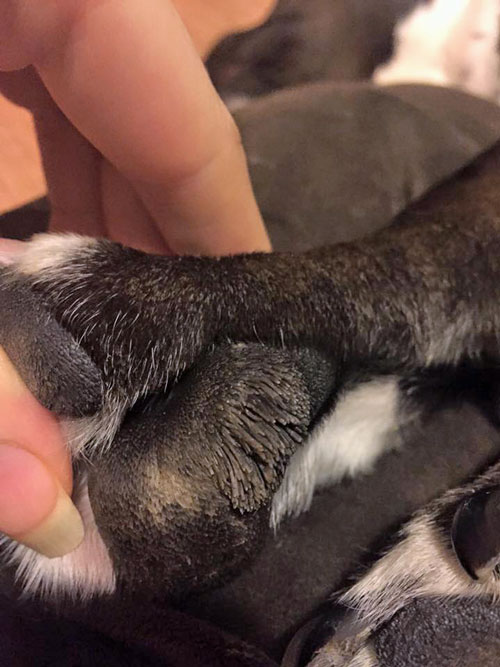
Theses are a common side effect from cyclosporine. Multilocular papilloma lesions on the footpads.
Dogs showed these types of dermal side effects during Atopica trials that were on the high end of dosage.
These will diminish once the dosage is decreased. This may be a sign this dose is too high for your dog. If this were me I would decrease closer to what is normally considered a maintenance dose for dogs for a trial period to see if they subside.
You may see that info here.
http://www.drugs.com/vet/atopica.html
My best patrice
Brigitte,
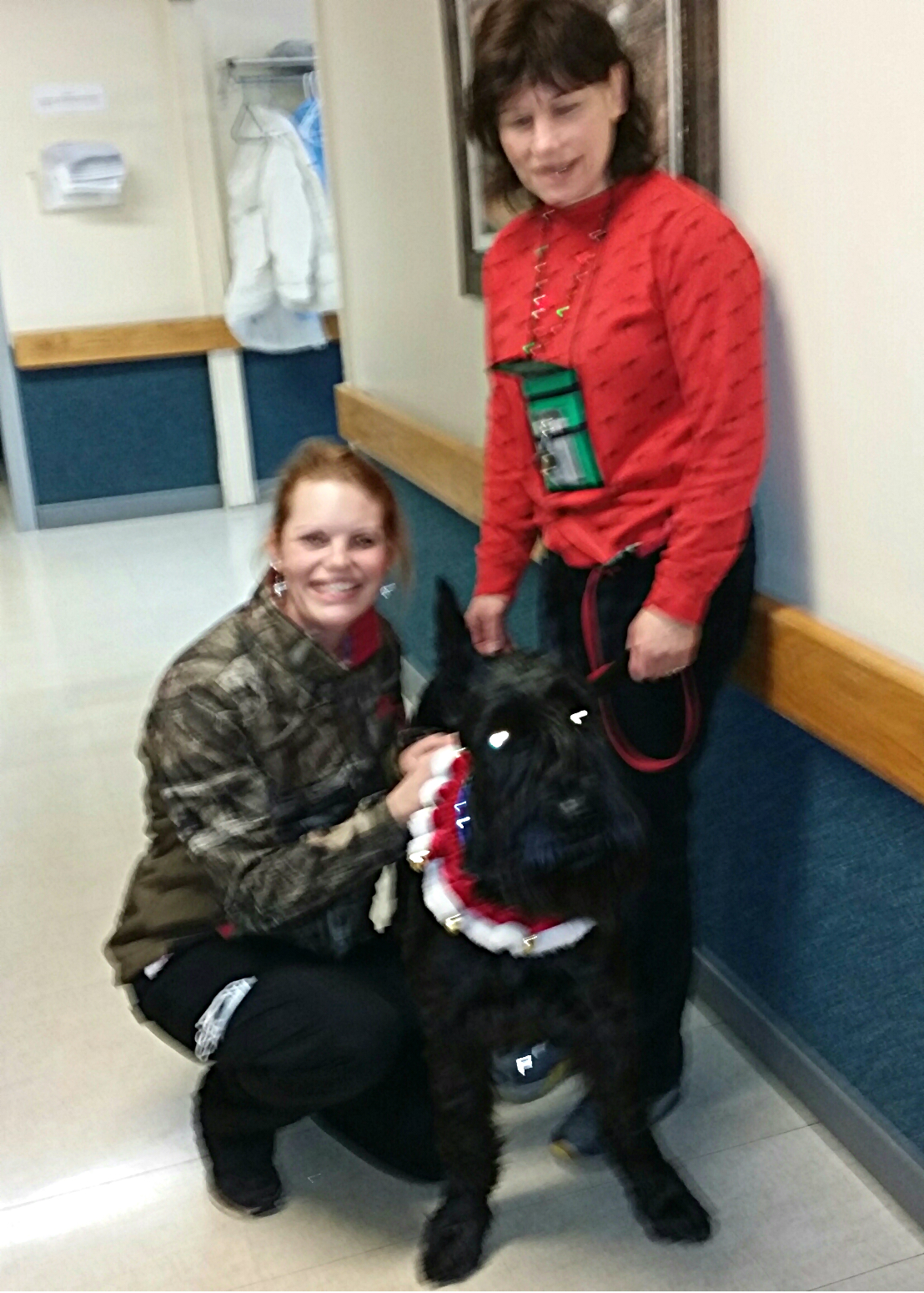
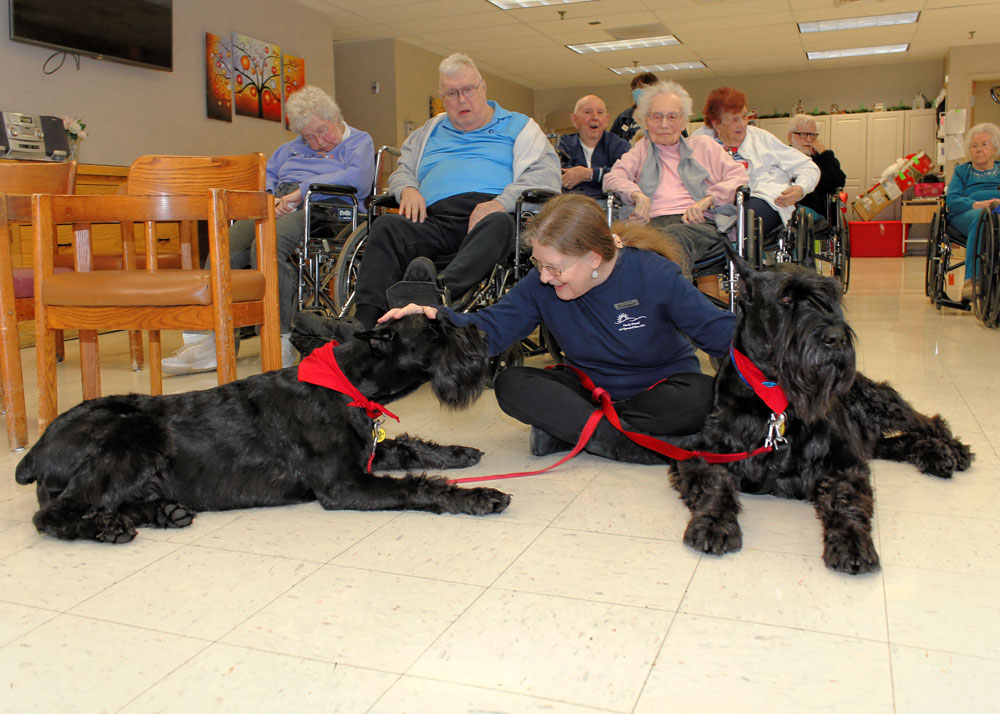
Yes, Willie is very outgoing. He immediately gets attention by everyone that sees him. There is no question that they all want to touch him and admire him. A very big active dog is an amazing thing to see in the nursing home. The staff all gather around him like groupies. Visitors cannot resist coming over to meet him. The residents get wide eyed and put both hands out to draw him closer. In every picture I took today I could see they were studying his face intently.
Honestly, if I was living there, I wouldn’t want to visit with a sedate disinterested pet. That’s why I bring him in there, he is fully involved with everyone. And occasionally he gets so happy he puts his head back and howls. Today there was a family walking down the hall with a young teen. Willie was so happy he howled and she looked startled for a second because she was so close to him. But then I said “he is very happy to see you!” And her face broke out into a big grin.
So he still gets distracted by odors and wants to look under chairs and beds for things. When he’s decided he’s done, we are off to the next room. It’s impolite of him, but he is a dog after all. ;-}
I think Willie is starting to feel pretty comfortable about visiting the nursing home. He’s still a young dog, but I think the residents like that he is an active dog. They are so delighted to see him that little mistakes are completely overlooked.
(Had to remove photo. Privacy laws in US!)
my best
patrice
Mike
This is called capillary refill time. Here is a good description that may help you understand this better.
https://www.secondchanceaihadogs.com/AIHA_Terms/capillary-refill-time/
my best, patrice
Jen,
Sorry to read this, you must be a bit frantic.
This could simply be an ear infection and that can lead to this symptom.
However, with the eye nystagmus this could be something more serious.
I don’t want to panic you, but I do want to be fair and let you know a possibly more serious condition that this could be so you can check with your vet. Please, can you tell me if your vet did a full tick panel to rule out tick disease?
Unfortunately these symptoms you describe can be attributed to the neurological symptoms of certain tick diseases. Here are just a few of the many symptoms in Lyme Disease and I have seen this happen to a number of dogs on Tick-L:
Head, Face, Neck
5.Unexplained hair loss
6.Headache, mild or severe, Seizures
7.Pressure in Head, White Matter Lesions in Head (MRI)
8.Twitching of facial or other muscles
9.Facial paralysis (Bell’s Palsy)
10.Tingling of nose, (tip of) tongue, cheek or facial flushing
11.Stiff or painful neck
12.Jaw pain or stiffness
13.Dental problems (unexplained)
14.Sore throat, clearing throat a lot, phlegm (flem), hoarseness, runny nose
Neurologic System
36.Tremors or unexplained shaking
37.Burning or stabbing sensations in the body
38.Fatigue, Chronic Fatigue Syndrome, Weakness, peripheral neuropathy or partial paralysis
39.Pressure in the head
40.Numbness in body, tingling, pinpricks
41.Poor balance, dizziness, difficulty walking
42.Increased motion sickness
43.Lightheadedness, wooziness
Dogs, in particular, that have these facial symptoms, can experience a serious inflammation of the eyes called Lyme Uveitis and this is often something a vet can diagnose with a visual examination (viewing the eye from the side and looking for a shimmering.) Treatment is a high priority in these dogs to protect their future vision.
Treatment for Lyme Disease is doxycycline and Tick-L recommends a higher longer dose. “The dosage we recommend on Tick List is an aggressive one: 5 mg. of doxy per pound of body weight given every 12 hours for 8 weeks. ”
my best
patrice