Forum Replies Created
Thanks Guys!
Vally,
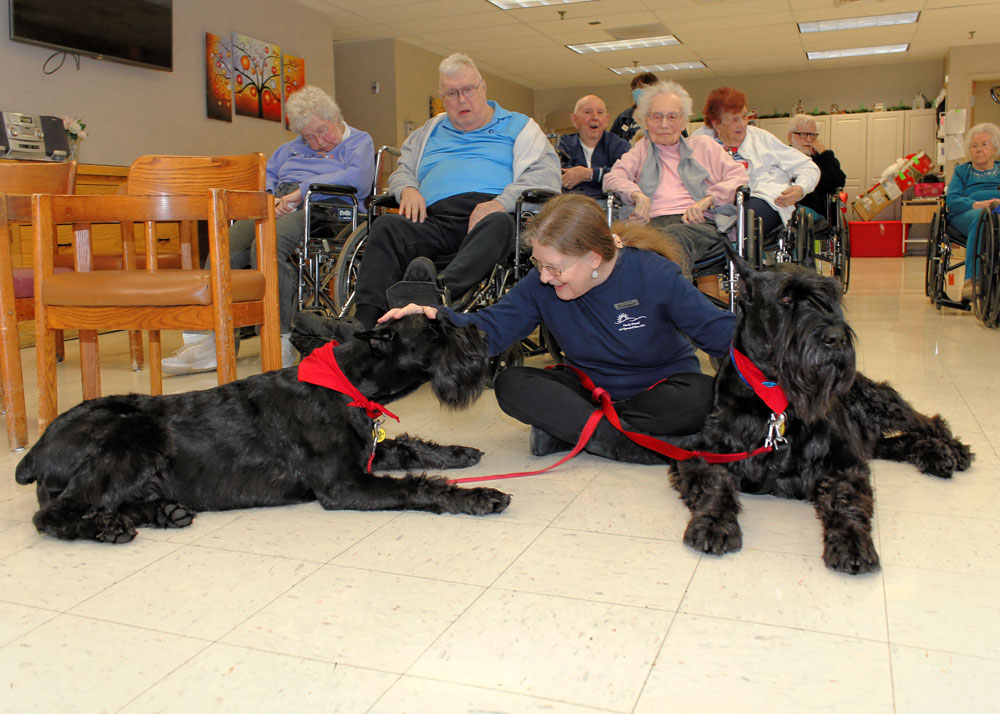
“Therapy Dogs International (TDI®) is a volunteer organization dedicated to regulating, testing and registration of
therapy dogs and their volunteer handlers for the purpose of visiting nursing homes, hospitals, other institutions and
wherever else therapy dogs are needed.”
- Therapy Dogs International (TDI®) was founded in 1976 by Elaine Smith.
- The First TDI Therapy Dog Visit took place in 1976 in New Jersey with five handlers and six dogs. Five of the dogs were German Shepherd Dogs and one was a Collie.
- TDI was formed so that dogs could be tested, certified, insured, and registered as volunteer Therapy Dogs.
Willie will begin by visiting the same nursing home that Chance visited. It is the easiest thing for him to start with. But TDI has many other facilities it partners with:
Assisted Living, Children Reading to Dogs (Tail Waggin’ Tutors), DSRD (Disaster Stress Relief Dogs), Home Visits, Hospice, Hospitals (Children’s), Hospitals (General), Libraries, Nursing Homes, Schools and Shelters.
If I wasn’t working I would love to take the specialized training for Disaster Stress Relief Dogs. You have to travel to disaster locations and that would be a tough thing to do with a big dog. These dogs are trained in many situations such as traveling on public transportation and working in hectic situations.
See pictures of the work TDI dogs have done at disasters:
http://www.tdi-dog.org/OurPrograms.aspx?Page=DSRD+%28Disaster+Stress+Relief+Dogs%29
But in the future I would like to take him to the library and school, they are in our backyard. I also think he would like doing home visits, something Chance also did. A visit can be anything, TDI is not restrictive about that. But if you want to be officially visiting, you must be wearing your badge and it must be documented by the facility. Each time we make a visit we are covered by insurance.
Linda,
I’m sorry you had to give up the training, it really is a fun job for your dog. You are right, the trainer has to be properly trained to help with this kind of specialized behavior from a dog. It’s not purely obedience, but cultivating a desire to be friendly with people. The obedience is only there to help you control your dog in all situations.
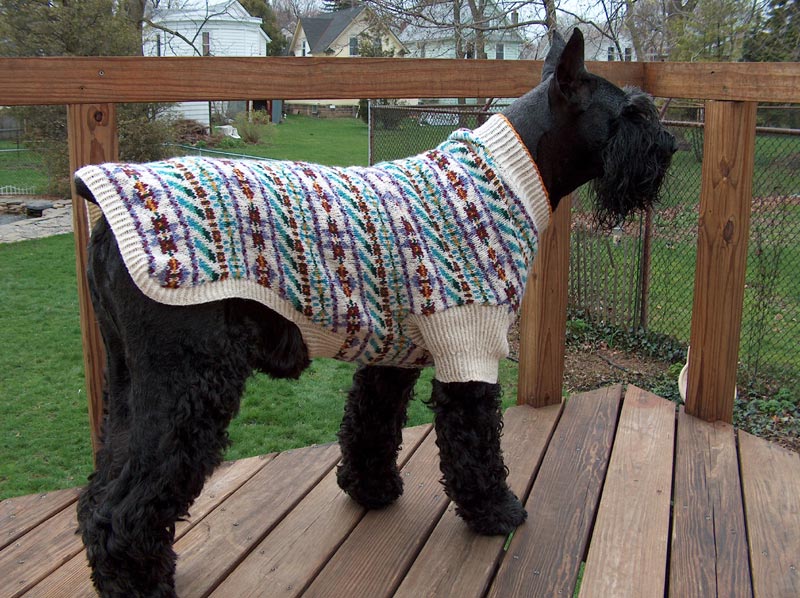
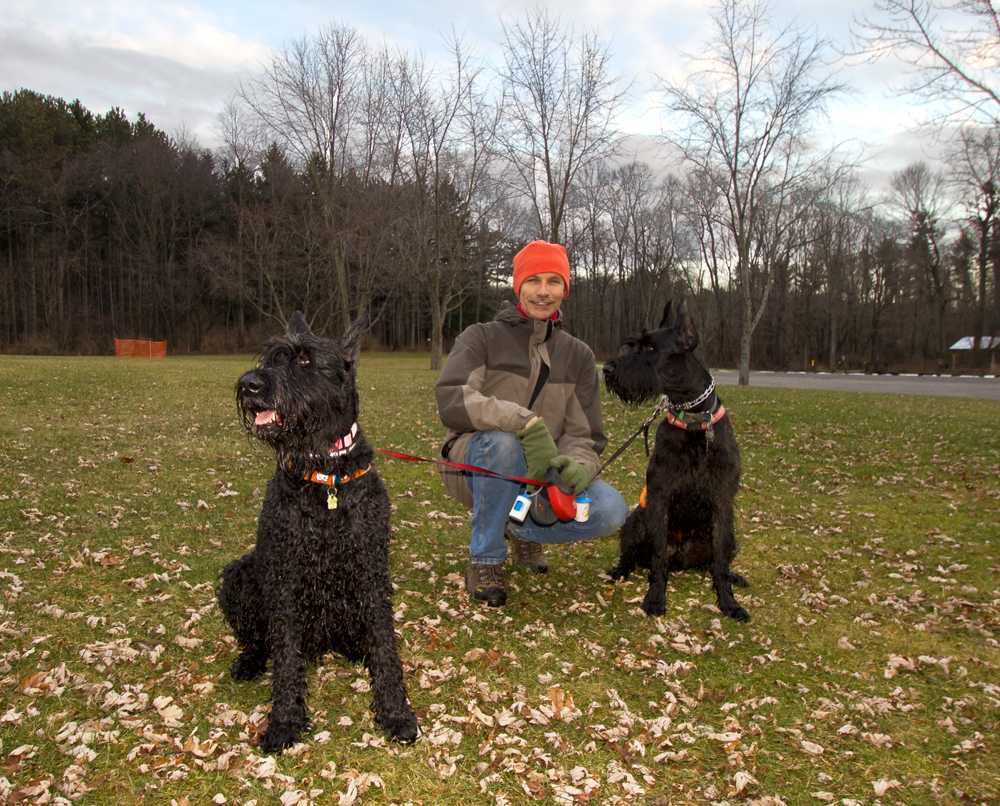
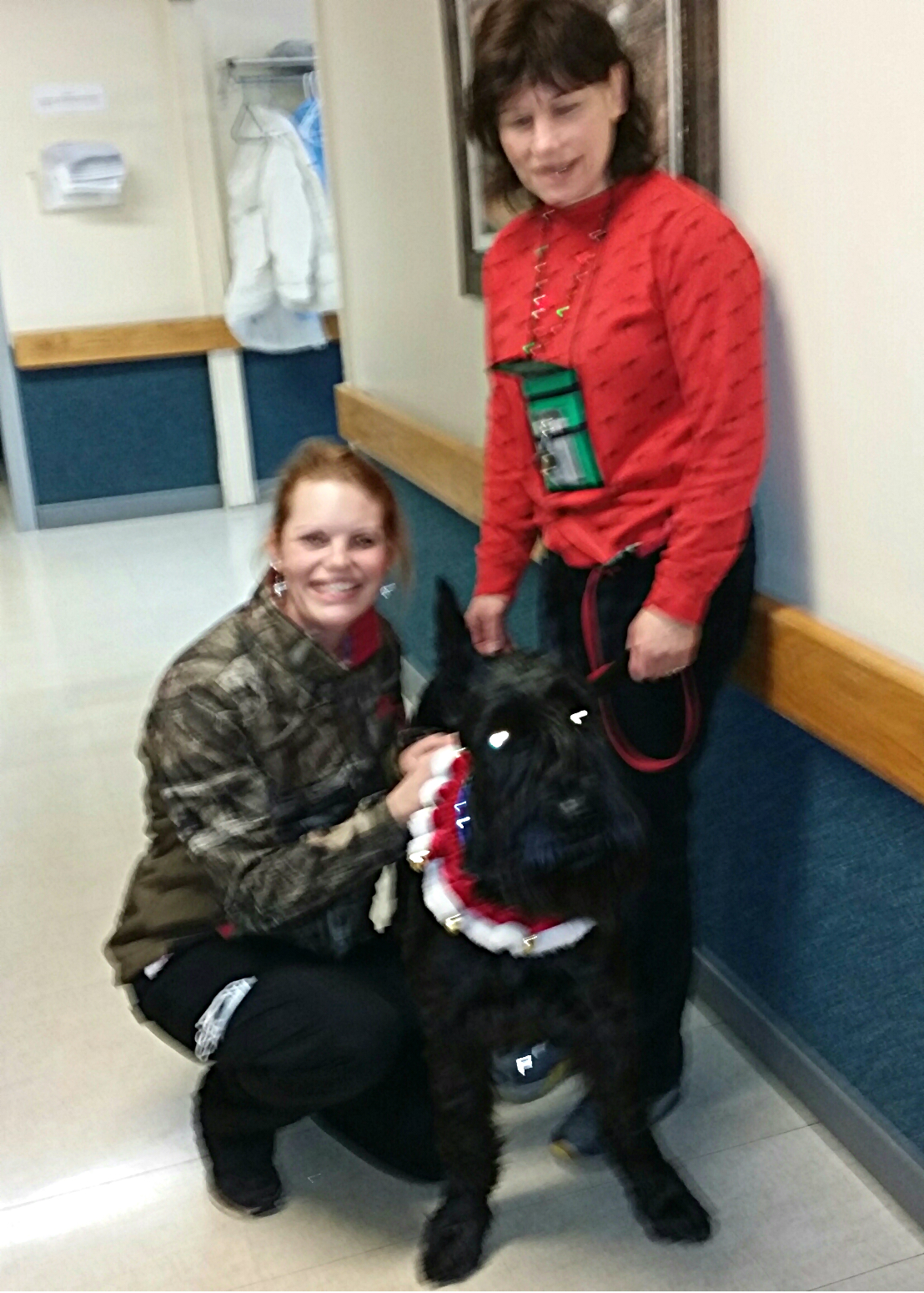
Willie is just 3, merely a teenager considering he is a Giant Schnauzer! He has always loved to be around people and is always a happy dog. I have found the right trainers to help me. Being a big friendly dog, obedience is critical, but it’s not how you train a dog to do therapy work!
I’ve had a couple of trainers in the past that trained obedience and they made their dogs fearful, you could see it in their eyes and behavior. One trainer told Mark and me that Cassie would never pass the Canine Good Citizen test! But the independent CGC tester that came to administer the test did pass Cassie and told us “you have a happy and exuberant dog, congratulations!”
So training a dog for therapy involves building trust and teamwork. A dog that trusts you will gladly work with you as part of a team because you do things that are fun! The more work you do, the more eager the dog is to go along.
Out of all the dogs that tested yesterday, all but three small dogs made it to the end and passed. The small dogs couldn’t perform the required obedience. During certain parts of the test they had to sit and down on command. These small dogs that wouldn’t do those things were eliminated. The evaluator said that the Come test was the most important test. It must start from a down. If you can’t get your dog to lie down you can’t complete the test. It was heartbreaking to watch the owners being bumped out of the test.
The examiner, however, seemed to ignore some things with Willie that I wouldn’t have let get away. So I think perhaps that they examine the “whole package” and not just the individual elements. I’ll tell you why I think that.
Taking that possibility into consideration, Willie was the dog who clearly had the most desire to visit with the “residents” and was very friendly. You could see the difference, he was enjoying it! Many of the other dogs seemed likeable enough, but didn’t seem to know what to do when visiting a patient.
So one of the tougher tests involved a simulated nursing home hallway. You and your dog must walk through a group of residents who have crutches, wheelchairs and walkers. One resident is screaming that they don’t like dogs and trying to hit you with their walker. They are all actively getting in your way so that you have to maneuver through them. Once you are through that maze, you encounter a staff person who drops something big and noisy. Yesterday it was a fake flowerpot with fake flowers. Throughout this you are to control your dog and he may not appear extremely skittish or react aggressively. Your goal is to get through this hallway quickly.
Most dogs jumped back startled when she dropped the pot and then moved on with some urging by their owner. Willie saw the flowerpot drop and walked over to briefly smell it. Then he gently moved to the “staff” person and looked up at her wagging his tail as if to say “Are you ok? Do you need me to help you?” I saw no urgency to keep moving at that point, which was probably not a good move on my part considering the goal of the test was to get through the hallway quickly. But really, this is something I would allow him to do if it was a real visit! I could have lost points for stopping like that during the test, but for some reason I didn’t. I guess I thought he needed some reward for all the crazy things that were happening.
Well, I thought he wasn’t going to pass, but he did. Today we took a walk over to the nursing home. I can’t go inside yet, but we sat outside with a woman and her mother. Willie had a brief visit with them and the woman brought him some water. Perhaps once I get my paperwork done we can go visit her in the room!
my best, patrice


Lynda,
My opinion, and I am not a vet, is that the Imuran has done nothing so far. I feel, again my opinion, that is is suppressing the production of the bone marrow. The lymphocyte values on the last CBC are still very high. The cyclosporine will target these within about 2-4 weeks and you will see a decrease in them on the blood test.
If, in 2-3 weeks you still see no response, either shown by regeneration or a significant decrease in lymphocytes, you can go back to the Imuran.
Chance was as profoundly non-regenerative as Honey is. I had to make a choice what to do. It was very difficult emotionally for me to make any decisions, but I trusted Dr. Dodds at that point. He was going to die if I did nothing. The specialist was out of ideas and my vets were beyond their expertise. Remember, at that time I had no idea what this drug was and I knew nothing about how it worked or when to expect results. Since then I have seen many miracle dogs recover with this drug from profound bone marrow failure.
Dr. Dodds is correct, these cases are difficult. I can’t pretend that they are not. But I know a little more now and I have seen some amazing results in dogs.
Remember you drive the bus. You have Dr. Dodds as a passenger, keep in touch with her.
my best
patrice
Vally,
Use caution with true licorice. It does modify the thyroid and can do so in unpredictable ways if you are also supplying thyroxine. I would skip that for now. I need to re-read some notes from Dr. Dodds about this, but I do remember the caution. We just found that Cassie, due to a small weight loss, was actually on too high a dose of Soloxine! So she was experiencing HYPERthyroidism. So we had to get a new, lower dose, prescription!
The same caution applies to iodine. Kelp is the culprit for most dogs, sometimes being put in dogs foods and supplements. Dr. Dodds demonstrated at her workshop I attended how excess dietary iodine can actually “speed up” an autoimmune attack on the thyroid gland. Kelp has a very high content of iodine (that is variable depending on where it is harvested.)
During the lunch break we all stood around the door prize table reading the labels of the supplements. We found some had way too much iodine in them (kelp) and Dr. Dodds told us to either not use it or to use this sparingly. I am very cautious with Cassie’s diet now to avoid any kelp.
I think Bingo may be experiencing some problems with the reduction of prednisone and it may be causing him to have too low an amount of cortisol in his body. At this point you can either talk to the vet about not continuing so aggressively with the reduction or you might actually testing Bingo’s adrenal function to see if he is responding properly.
I don’t like to see any dog suffer during these decreases. I know for a fact that Dr. Dodds has advised that some dogs just can never go off a low dose of prednisone the rest of their life. Bingo may be one of those. There is no stigma attached to this, it is precautionary and something she routinely advises.
I feel very badly about how he is responding. I urged you to try the decreases and I know your vet did too. I once had to take prednisone for a severe allergic reaction. The weaning process was DREADFUL. I felt like I was going to die, I was so weak and washed out. It was over two weeks before I returned to somewhat normal. And I only took prednisone for a short period of time!
Please let me know what you do.
my best, patrice
Ruth,
Please keep an eye on the shivering. It is not always related to being cold or being scared.
Sometimes dogs can develop pancreatitis from taking prednisone. This can be painful and a dog might react with this kind of shivering. Dogs may also arch their backs trying to get comfortable.
Make sure you mention this to your vet so they know about it.
my best, patrice
Lynda,
I am so glad you were able to get another transfusion and it sounds like it did a lot of good for Honey. You must feel very relieved that it went well. Good job Mommy.
I can see many people urging you to ask to switch to cyclosporine and I know Dr. Dodds urged you to use this as well. I wanted to tell you about my experiences with it and what I have learned about it since I used it with Chance.
When Chance was very ill and Dr. Dodds came on board with her treatment, the first thing she did was put him on cyclosporine (veterinary brand Atopica). It saved his life.
I have, in the 7 years since he took this, done oodles of research on this drug. Atopica has been extensively tested and marketed for one primary use: dogs with allergies. That is how the company makes money with it.
The use of this drug for other autoimmune conditions is considered off label, simply no tests have been done to determine the effectiveness with conditions other than allergies. That does not mean that it is not being used for autoimmune conditions! On the contrary it has become a very popular drug for many conditions and is widely prescribed by vets. Dogs handle it surprisingly well. For dogs with life altering allergies it is a game changer, making them comfortable for the first time in their lives.
I have read all the research results that were done with this drug. When they test this, they may give 4-6-8 times the dosage that would normally be given. They evaluate the dogs in many ways to see how effective it is for the result they want to see. They want also to determine what side effects there are, how serious they are and at what doses. They want to see if these side effects are reversible when the drug is removed. So the unique aspect of this drug is how it accomplishes the job. Let’s contrast it to prednisone first.
Prednisone is like an atom bomb to the immune system. By that I mean that it suppresses the whole immune system, all the white blood cells, even the good ones that protect us from infections. As you reach prolonged high dose therapy with prednisone you see more problems with every organ and system as the body is flooded with too much cortisol. The early benefits of prednisone soon become deficits. And you cannot remove this drug rapidly from the system, it must be carefully decreased. The bad effects of this drug linger for weeks, months before you are finally free from them.
Cyclosporine on the other hand targets only the bad guys of the immune system, the killer t-cells lymphocytes. And what is interesting is that you use the same dose to get that result as you do to treat canine allergies. This is because in both cases, it is the same guilty t-cells causing the problem.
Cyclosporine was developed to be used in human medicine to stop organ transplant patients from rejecting their new organs. Prednisone had worked but the side effects were disastrous for these already sick people. It is developed from a type of mushroom and targets those lymphocytes very specifically. So for millions of humans it has been a life saver. Now it is helping many dogs and even cats. The uses for this drug have expanded to a number of autoimmune conditions.
What are the side effects that researchers found when they tested this drug? At the normal doses, they found some dogs (but not all) had some level of digestive problems such as diarrhea, nausea etc. A few dogs had worse digestive problems. All dogs in the normal dose groups had no more problems once the drug was removed or the dose lowered. Dr. Dodds has often suggested that the drug be given with food for a few days, or the dose lowered to see if the dog can tolerate it this way. In most cases a dog will adjust to it and be fine after a few days exposure.
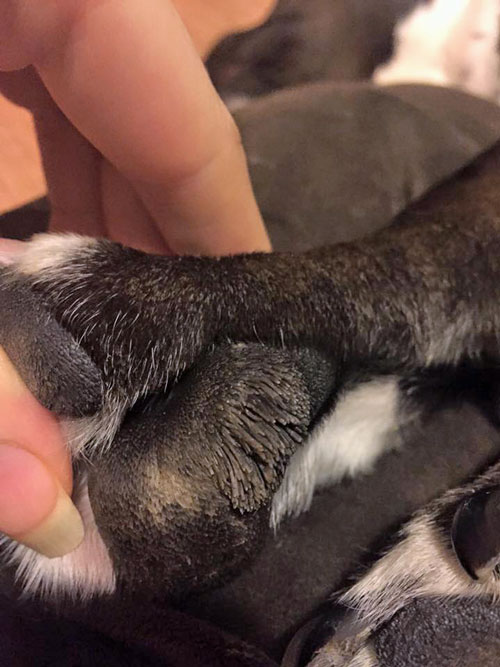
Used for long periods of time some dogs develop calcium deposits in their skin. These can be unsightly but are not generally harmful to the dog.
See this picture and description of this:
https://www.secondchanceaihadogs.com/AIHA_Terms/calcinosis-cutis/
At super high doses some of the dogs had more serious problems but you would never give any dog those kinds of doses in real treatments. Those side effects are not the same side effects that you see with prednisone.
So the question here was, can this suppress the bone marrow production of red blood cells? Absolutely not. It doesn’t affect red blood cells at all. It has a very narrow focus of attack.
Can some dogs have problem with this drug? Yes, bloody diarrhea is one problem. Chance, when he was at his highest dose, tended to have what appeared to be a trance like state for about an hour after his dose and I have read human medicine studies that report this. Did he have this the whole time he was being treated? Absolutely not. He was only at this very high dose for about 3 weeks. Once he started to regenerate, Dr. Dodds had me begin reducing it.
Do dogs need to have their blood levels tested? No. Dr. Dodds had me pulse dose him. That means he received his doses Monday through Friday and on weekends he had a drug holiday. This type of dosing seems to enhance the sensitivity to the drug. But yet this drug was highly successful despite his dosage being interrupted for two days. Why? I asked Dr. Dodds and she said that you can tell when the drug is being effective in two ways. One is that the number of lymphocytes on the CBC will begin to drop. The second is that you will begin to see regeneration: reticulocytes in greater numbers. She told me not to waste my money on this test. It is valuable in human medicine but for our purposes it is money that is better used for other elements of the treatment.
What is the downside then? Cost. This stuff is very expensive and in a big dog it can be a significant monthly cost. But, and this is very important, if it is going to work in a non-regenerative dog, it usually happens pretty quickly. You can expect not to be at the high doses for a very long time. Maintenance doses are therefore cheaper and eventually you can decrease it to low or no dose.
What is the major benefit of using this drug? It preserves the health of the dog. They can tolerate treatments for longer periods of time because there are fewer side effects. No organ damage, no infections, no adrenal gland problems. The day you stop dosing the drug is already being removed from the system.
I know many dogs have used imuran, azathioprine and have been very successful. But it is a harsher drug with a lot of side effects from my viewpoint and I would not want to see a dog with non-regenerative anemia on it for prolonged periods of time.
my best
patrice