Forum Replies Created
Marcella,
This is such bittersweet news. I don’t think knowing this makes you feel better. I wish this hadn’t happened this way.
What you did at each step of the way was done purely out of love and concern for Emberlee. I have no doubt that she felt that from you.
I hope you will find some peace of mind from this message. We are all hear to listen and comfort you whenever you want it.
my best
patrice
Further research indicates that some dogs that have a compromised immune system (like those on prednisone and cyclosporine etc) may developing sinonasal aspergillosis, a fungal infection. This can produce a purulent discharge that may be unilateral to start and could become bilateral as it worsens. Do you see any raw or white areas on the nostrils?
Reading the medical information on diagnosing this indicates to me that this can take significant work to diagnose properly and that a vet would not begin treatment until there is a definitive diagnosis. In other words, if they are going to pursue looking for this, it will take days.
I have never, in all the years we have been helping owners, heard of this happening to a dog being treated. I can understand that this is horrible for you to look at and I would feel as panicky as you do. I am telling you all of these possible diagnoses because I want you to be educated when you walk into the vet’s office. Let’s hope your vet says, oh this looks like allergies to me.
my best
patrice
Canine nasal discharge that is green is purulent or indicates infection.
This is sometimes seen with a fungal infection. There are some fungal diseases that are serious but it depends on the area of the country you live in. Tell me where you are at.
There can be a foreign object in the nostril. This can be a very common but serious grass called fox-tail. These grasses are very dangerous because they can not only embed in nostrils but can enter the blood stream and travel the body.
There can be a tumor of some kind in the nostril that would cause this as well.
So here is the diagnostic we can figure out now. Is this one side or both? A fox-tail or tumor is most likely going to be one sided. A fungal infection may be both sides.
Allergies would be both sides as well. Chance’s eyes used to have horrible colored goop in buckets at this time of the year due to his severe allergies. I had to remove it several times a day so he could see.
Is there any blood at all? Are the eyes also affected, red or goopy? Is one eye bothered and not the other?
We need to decide if this is something that needs immediate attention (fox-tail that must be removed asap) or just allergies.
I’d say if this is both sides, isn’t profuse and/or bloody, he seems to not be rubbing his face all over everything then it can wait until tomorrow morning. If this is causing him great discomfort, call your vet tonight.
my best
patrice
Lauren,
I am so sorry to read about Rocky. I am glad you have found a good vet and that the treatment protocol is perfect! You can help a lot at home by making sure the medications and supplements are given properly and that the food he gets is easy to digest.
I do recommend the use of Denamarin and used it with Chance. It is a pharmaceutical grade veterinary supplement made by Nutrimax. There are two ingredients. The first is Sam-e, a natural substance that helps the liver cells recover from the damage caused by processing prednisone. The other is silybin which is the active part of an extract from milk thistle, known as silymarin. This helps reduce oxidative stress in the liver. At one point Chance’s liver enzymes were close to 10x the normal values. His liver was very unhappy and it made him very uncomfortable. Denamarin quickly brought those numbers down to very near normal. You will see this on the chemical screen tests as alanine transaminase (ALT) and Alkaline phosphatase (ALP, ALKP.)
Use caution when giving any of these supplements so that they don’t conflict with the medications you are giving.
Pepcid and other acid protection should be given about an hour before a meal. Prednisone should always be given with the meal, not on an empty stomach. That alone helps protect the stomach.
Sucralfate is literally a bandage that coats, so it can block absorption of nutrients and medications. I found the best time to give it was on an overnight fast. But put at least one hour before meals/meds and two or three hour after dosing meds and food.
Atopica (cyclosporine) needs to be given on an empty stomach for best absorption. It can have a side effect of nausea and diarrhea in the first week. You could try giving it with food during this time until Rocky adjusts to it, that usually helps significantly. Then once he is adjusted switch to giving on an empty stomach.
Denamarin, because it contains Sam-e, should be given on an empty stomach, at least one hour before feeding, because food decreases the absorption.
Trying to juggle all these meds is tricky. Mark works days and I work nights so we were able to dose Chance with all his meds around the clock very easily. If you both work the same schedule it becomes tougher. Asking a family member or good neighbor to help can make things run smoothly. We made up a chart so we could check off when a med was given.
Keep a notebook in the kitchen and jot everything down each day, all the meds, dosages and times and details like how much food he ate, how did he feel, did he take a walk, do his business. My little book was invaluable and I still have it where I can look at it now and then, 7 years later, just to remind me how hard this was but how successful we were treating him. Chance’s progress is carefully marked in detail. On one page I write that Chance actually walked all the way across the school field to the playground that night! It was the first time he had been able to do that in months. I noticed as he got much better we got sloppy and didn’t always enter on a daily basis. A sign that he had improved so much we no longer worried about him recovering.
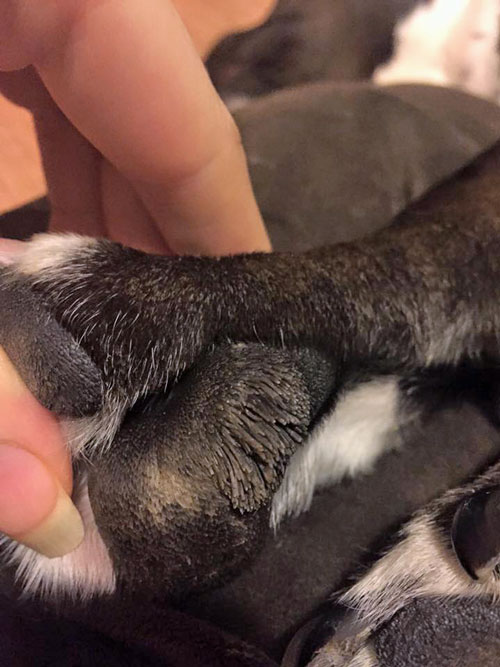
What you will be doing at home is good nursing care, making sure he gets his medications and nutritious easy to digest food. Lots of fresh water. A quiet environment and plenty of rest. Prednisone will make him feel very hot so put up some small fans on the floor with a folded blanket so he can cool off. When his liver begins to become enlarged from the prednisone he may not want to be on soft surfaces like the couch or bed and will seek out these cooler hard surfaces. But the folded blanket will protect his elbows. Chance’s elbows became raw from the prednisone.
He is going to be peeing all the time. We got to the point that we would sleep on the couch so we could get him out around the clock. I would get home at 1am and relieve Mark on the couch. If your dog is house trained, he will feel awful if he can’t help himself and pees in the house, make a special effort to get him out often.
He may not want to take a walk, but be sure to spend the same amount of time with him each day that you normally would spend on the walk. I would go through the routine of putting on his collar, getting the leash and then Chance and I would make it to the end of the driveway and then sit there watching the world go by. I tried in every way to make sure he thought that life was perfectly normal. There were times when he justed wanted to be left alone and I honored that. This disease and the drugs can make a dog feel uncomfortable.
With good care, he recovered. I have seen this happen many hundreds of times with other owners and their dogs since Chance was ill . The nursing care is what makes the difference. I see the same thing happening for Rocky, you are good owners and you have done all the right things.
my best
patrice
Vally,
In most cases vet have been advising using both some type of acid blocker (like pepcid or prilosec) and an additional medicine to protect the stomach (like sucralfate.) The acid blocker reduces the strong acid of the stomach walls and that reduces the prednisone from eroding that tissue. The sucralfate behaves likes a mucous bandage to heal and protect just in case ulcers have already developed.
my best, patrice
Ruth,
This is excellent news! A PCV (hematocrit) of 39 is well within what is considered a normal range for this value!
How did this happen? First the immunosuppression by prednisone (to start) and then the addition of Atopica, have been successful. This means that the white blood cells of the immune system that were responsible for the destruction of the red blood cells have been suppressed. Their numbers have been significantly reduced and they can’t do much damage in those numbers.
Second, the bone marrow now has the opportunity to actually make good reticulocytes (baby blood cells) and those turn into mature red blood cells within about a week. It can take some time for the body to replace the significant number of lost red blood cells. You are right that good nutrition is important in this production. The bone marrow has been trying all along but could not keep up with the number of RBC lost.
Why did this take some time? You started with prednisone, which can be a wonder drug in stopping the rogue white blood cells immediately. But as you already know the side effects began to become apparent. Adding Atopica, a drug that specifically targets those rogue white blood cells shifts the treatment protocol. That is why your vet feels comfortable reducing the prednisone a little. the Atopica is doing the heavy lifting right now.
Do I feel comfortable if you began to completely reduce the prednisone? Not really. Dr. Dodds admits there is a subgroup of dogs that can never completely stop the prednisone. She says it is kind of like a message to the immune system to “stay under control.”
Is Nula one of these dogs? Well, there is no “test” to determine that. But she is one of the breeds that is known to be genetically prone to this disease. Recovery can happen, but sometimes these dogs may relapse and it can happen abruptly. This breed is also known to develop systemic lupus erythematosus (SLE), another autoimmune condition.
So have a talk with your vet about this and express your desire to be cautious during her recovery.
I still urge you to be confident as she recovers that this will be the last time she goes through this! Your job in the future is to protect her. She will always need the best diet, protection from stresses to the body such as vaccinations, tick diseases, heartworm, viruses and bacterial infections.
If she has not been spayed, this may be something you want to consider doing when she is completely recovered. Hormones play a significant role in stress to the immune system.
I would never board her again, if this were me. I would avoid exposing her to sick dogs or places where many dogs gather like training classes, doggie parks etc. Also, if this were me I would never travel with her and that includes stressful travel like flying.
You also have a difficult decision about future vaccinations for rabies. This is a legal matter more than anything else. It is required by law and avoiding it is not a benign decision. Some areas allow vets to request a waiver and I suggest you work with your vet on this. You will have a significant responsibility to not allow her to ever bite a human or come in contact with a wild animal. But she will be safer, as Dr. Dodds generally recommends, from a relapse.
Again, congratulations! This is significant progress!
my best, patrice
Hi Ruth,
It does sound like Nula is more stable! That is such good news!
I wish that when we treated our dogs for this disease that they did not also have to go through all the side effects of the drugs. Sometimes they can seem worse than the disease itself.
After months of prednisone, Chance looked awful. But even worse were the unseen side effects on the “workings” of the body. One of prednisone’s more difficult side effects is muscle wasting. The medical term is catabolism.
This muscle wasting is not something that can be treated with more protein in the diet or more exercise. Reducing the prednisone will eventually stop this process.
Chance’s back right leg trembled quite a bit and even after he recovered, that leg always was a bit weaker and had the tendency to tremble.
Before all of our dogs were diagnosed with this condition they had been healthy active dogs. When we come out of the treatment process successfully our dogs may be a little different than before. But life is still good! These are bonus days!
After recovery Chance’s back leg was weaker and eventually his cruciate ligament became progressively damaged as a consequence of the long term prednisone he had been on. Two years later we had surgery done on the knee so he could continue to walk. It helped a great deal, but yet his leg did tremble at times.
Nula is playing with her toys and that is the best sign that she still has a strong will to live. She is doing her part very well. And so are you Mommy! This is hard work. Be patient with yourself. Make sure to carve out some “me” time every day.
my best, patrice