Forum Replies Created
Alyssa,
I am very sorry to read this. I suspect, though you didn’t mention, that this is MRSA (methicillin-resistant Staphylococcus pseudintermedius). This type of bacteria has become significantly resistant to antibiotics, not only in dogs, but also in humans. There is an additional strain that dogs are also contracting.
It is difficult to treat these and it is important to make sure that the proper treatment is started as soon as possible.
I found a 2011 article discussing a UTI in a dog, mentioning that doxycycline was effective for this dog.
http://www.ncbi.nlm.nih.gov/pmc/articles/PMC3022454/
And it makes sense that your vet may be using this drug. There is currently a shortage of doxycycline because it is also used to treat tick diseases in both dogs and humans. The cost to pet owners has gone way up. As you mention you are paying a lot per pill.
However, no matter what your vet is doing, I would recommend you ask you vet to contact Cornell University. They have done extensive research on treating MRSA in dogs and will have the latest information about what your vet should do.
Here is the AVMA Faqs.
https://www.avma.org/public/PetCare/Pages/MRSA-FAQs.aspx
Please get back to me what the report says.
my best
patrice
Jen,
Chance had terrible allergies. His ears were just one problem out of many. It was a heartache for me because they bothered him so much.
My vet gave us a prescription for Zymox (this was 2000!) and it worked. Not only did it work, he never had problems after that because we could use it for a day or two and that would clear any small problems up.
The best part about Zymox is that it isn’t a “medication” but rather natural enzymes. It contains no antibiotics. It comes either with or without cortizone. I never used the cortizone. It’s as safe, effective and I wouldn’t hesitate to use it.
my best
patrice
I like both Vally’s and Brigitte’s idea about this. This kind of smaller reduction doesn’t have to be for a long time, but perhaps for 2-4 weeks more. It gives you a little more time to evaluate how she does with the smaller reduction. If there seems to be a problem, the dose increase to get her back to where she was previously stable would not be so great.
The only reason I might urge a 50% decrease is if there are extreme side effects from the prednisone such as serious infections, life threatening stomach ulcers, pancreatitis, development of diabetes, extreme body deconditioning (such that she cannot walk or stand) etc. These may be good reasons to decrease a little quicker.
my best
patrice
Adam,
That is really super news! 34 is excellent, just a few points away from low normal: 38%. Nothing to worry about here.
Lowering the dose of prednisone has been responsible for reducing many negative side effects. They will still continue to exist until he has completely reduced and stopped the prednisone. He will have fat and fluid redistribution and there will be continued muscle wasting / atrophy. These account for the bloated tummy look and a general de-conditioning.
Lowering the dose of cyclosporine helped reduce the diarrhea. I think you can safely try giving this about 2 hours before a meal on an empty stomach now, which allows for maximum absorption.
Hmm. All clinics should be taking a full CBC complete blood count and chem screen to monitor his condition. This is always the first step in diagnosis. I am surprised they have not done this. It is really very important. Automated analyzers are used widely because they can not only perform the test quickly, they also provide a wide range of diagnostic information that used to be quite labor intensive to obtain.
I can’t image how you could make a mistake with a spun PCV. There is nothing to calibrate. It’s simply a small tube of blood, spun in a centrifuge, and held up against a chart. PCV’s were used, though spun by hand, in WWI during the later 2 years of the war on the battlefield when they began attempting transfusions!
A chemistry panel tests kidney function, liver function, electrolyte levels, glucose levels, pancreatic enzymes, etc. It tells us essentially how healthy he is. This is usually where we see the negative effects of prednisone, liver enzymes can be greatly increased for instance or there can be signs of it bothering the pancreas.
You can view a short introductory video on the CBC here:
https://www.secondchanceaihadogs.com/aiha-video-library/aiha-introductory-videos/
The CBC shows relationships between the variety of cell types in the blood. For instance an important value that is missed when you only monitor the PCV is the platelets. In autoimmune disease, these can also be low. I don’t think that is the case with Tiger but it would have been very important in the first few days to find that out. The CBC also provides values for the white blood cells, for instance looking for infection.
Here are the guidelines for reducing prednisone:
https://www.secondchanceaihadogs.com/AIHA_Terms/prednisone-dose-reduction/
It is usually wise to reduce only the prednisone for a period of time to begin getting rid of the annoying side effects, which are numerous. Some of these, like muscle wasting, will take months to recover from. But they eventually do go away!
Reducing the cyclosporine can follow once he has reached a clinically good HCT and has remained stable for a period of time. This drug has fewer side effects and these tend to go away very soon after discontinuing it, generally with no lasting effects.
We’ll be here to help you through these steps, don’t worry!
I’m so glad to hear he is more himself this week! Good work Dad!
my best
patrice
Hi Adam,
I see you took my advice and decided not to worry this weekend. ;-}
Pale gums during rest and sleep are normal in a dog. Anything stressful causes the spleen to send more RBC into circulation. This is also normal and is adaptive for survival.
See this glossary item. Transient Erythrocytosis
https://www.secondchanceaihadogs.com/AIHA_Terms/transient-erythrocytosis/
Promise me you will give Tiger a big hug and enjoy the rest of the day.
my best
patrice
Adam,
This is the second time you have reported that the vet’s office claimed a value was wrong because the tech did the test wrong. I’ve mentioned this to you before that you should try to get this under control to your satisfaction. This is not a minor mistake. The treatment protocol is dependent on the results of these tests. The next time you go in, please request that the vet do the blood draw. Smile and be polite but remind the vet that this is the second time this has happened (are there more?) and it is really getting on your nerves. (Not to mention mine as well.)
On your end make sure that Tiger is prepared properly for these tests. He should be fasted at least 10 hours beforehand and should have plenty of water to drink. Fat in the blood from a meal can cause artifacts that can alter the values significantly.(The technical reason for this is that fat is light refractory and most clinics now use laser analyzers that can make mistakes when there is fat in the sample – think of how oil looks on a puddle of water.)
Dehydration will also significantly alter the values on a blood test and it makes it harder for the tech to get a proper blood draw, this leads to damaged red blood cells and that can cause these values to be extremely variable (and incorrect).
To technically to understand this, think of these values as percentages of the whole of the blood sample. So they have a relationship to each other. If you take three quarters cup of white rice and a quarter cup of wild rice and put them in 4 quarts of water and then take a small sample you will find very little wild rice and not much white in the sample, in fact you may not even see any wild rice! Take that same cup of mixed rice with a half cup of water and you will see a lot of both rices in the sample, like too much! We want the blood to be properly hydrated, somewhere between these two extremes so that the measurement of the different cells are properly measured.
Be sure to pick a quiet time of the day and get there early so that you can get Tiger calmed down with a walk and some relaxation in the waiting room. If this was not explained to you before and they claim that is the reason the tests are variable, smile and say “perhaps you can test him again for no charge since it wasn’t made clear to me.”
All this said, a tech really should know when they have made mistakes, to them it is apparent. They know when they have damaged RBC during the draw and they know if they have mishandle the sample, perhaps leaving it too long before finishing with it so that the sample actually begins to change. Red blood cells that sit like this can absorb too much water and burst, this is hemolysis. Platelets can form clumps.
This isn’t the easiest job with really sick animals, but they need to make an effort to get it right. A sample like this should be throw out and a fresh one taken.
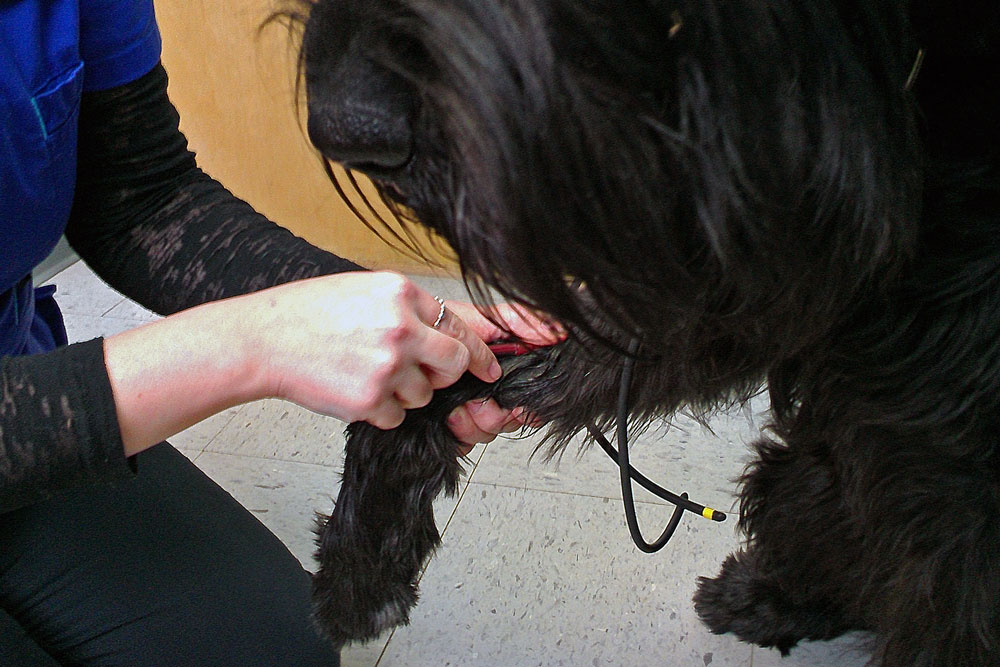
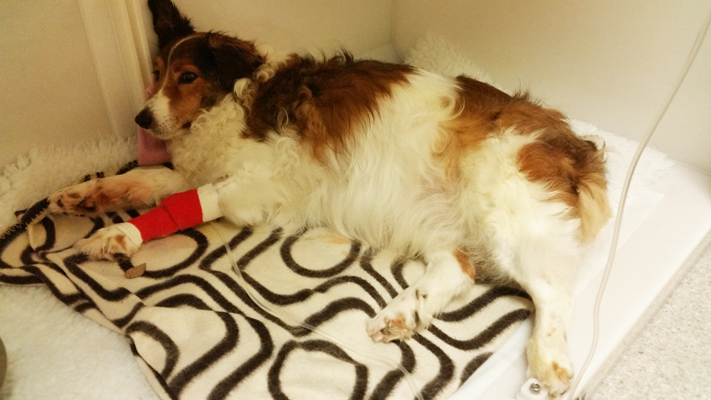
How many times have I had my dogs in for blood tests? At this point I am sure it numbers into the hundreds. I know the difference when I see them taking it. I try to do everything I can to help them manage my dog comfortably. You will see a picture of Willie in the slide show offering his front leg for a blood draw. The techs love him because he just lets it happen, no struggle.
But since these things are really expensive, it’s now in the vet’s court to make this up to you. The vet can do the next draw so you can be sure it is done correctly. Smile and be polite about it, be gracious. But get it done. I want you to also request a simultaneous PCV test. This is a small tube of the drawn blood that is manually spun and held up to a chart that shows the packed cell volume. This is a more accurate indicator for reference since the laser analyzer can make mistakes on blood of very sick dogs because there are many more odd or different cells right now. The HCT hematocrit is going to be somewhere between 2-6 points lower than the PCV. It shouldn’t cost more than $10. When Chance was ill I had one drawn each time we walked in. The amount of blood is tiny. See the glossary item for PCV to see the tiny tube.
I have said for years to owners, the numbers are not the whole picture. When your dog acts like he is feeling a lot better, well… he IS feeling better. Dogs can’t lie. I don’t believe this lower value is correct, or at least Tiger is adjusting to it so that he feels quite good at this value. So the short of this is, don’t worry unnecessarily over the weekend. If he’s acting ok, (is he eating today?) then just enjoy him over the weekend. Spend some happy quality time together. If you worry he will pick up on this and react to it as though he had done something wrong.
I don’t like to see vets reduce both drugs at the same time but sometimes it has to happen like this. Constant vomiting, diarrhea, failure to eat and sometimes even pancreatitis or the worst I saw was a dog that had developed sudden and severe diabetes because of the prednisone. These are reasons for a quicker reduction. In this case your vet has agreed that the dosages he was originally on were very high. I agree. So letting a dog remain extremely sick because of high doses just weakens them and they can’t recover as quickly. We want to keep Tiger as healthy as possible right now.
Please let me know tomorrow how he is doing. I want to know.
my best
patrice
I was originally curious about this and asked Dr Dodds right away. She was puzzled how this got started. Both of us read the storage info on the back of the package. It’s very clear about storing at room temperature and not to freeze.
http://m.medlineplus.gov/druginfo/meds/a601207.html#storage-conditions
“What should I know about storage and disposal of this medication?
Keep this medication in the container it came in, tightly closed and out of reach of children. Store it at room temperature and away from excess heat and moisture (not in the bathroom). Do not store this medicine in the refrigerator and do not freeze it. Throw away any medication that is outdated or no longer needed. Throw away any remaining solution 2 months after you first open the bottle. Talk to your pharmacist about the proper disposal of your medication.”
Adam
I noticed the higher dosage of cyclosporine originally but did not worry about it. Often Dr. Dodds will recommend a “loading dose ” for about 5 days and then a reduction to a standard dose. This drug’s first use in dogs officially was marketed as Atopica for treatment of canine allergies. This same dosing protocol is standard for these dogs as well.
The prednisone is often decreased like this by Dr dodds for dogs coming home from hospital. Keep your eyes open for signs of extreme fatigue and weakness when you decrease the prednisone this way and call your vet immediately if it appears serious. Make sure your vet does a spun PCV within a few days of the decrease. You may see a small decline of a few points. If it is significantly more make sure your vet has a plan of action to treat this.
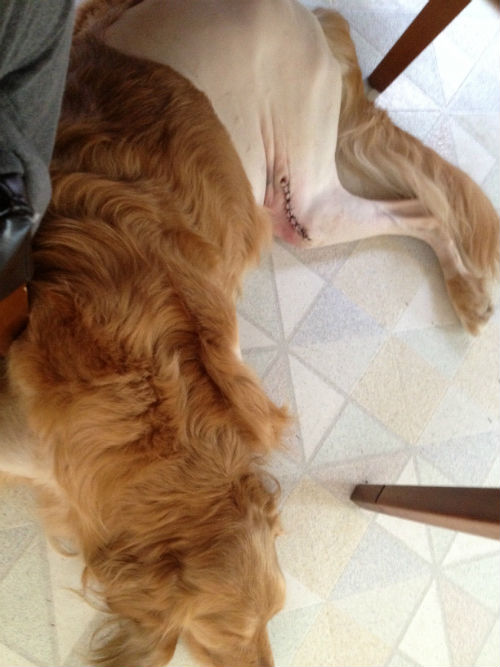
Food and good nutrition are critical right now. Entice him with small tastes of really smelly tasting stuff. Rub a pan with a bit of butter and a sliver of garlic and saute a skinless chicken breast. This is highly interesting to dogs. Right now while Willie is recovering from surgery I am making him pots of long and slow cooked chicken frame broth.
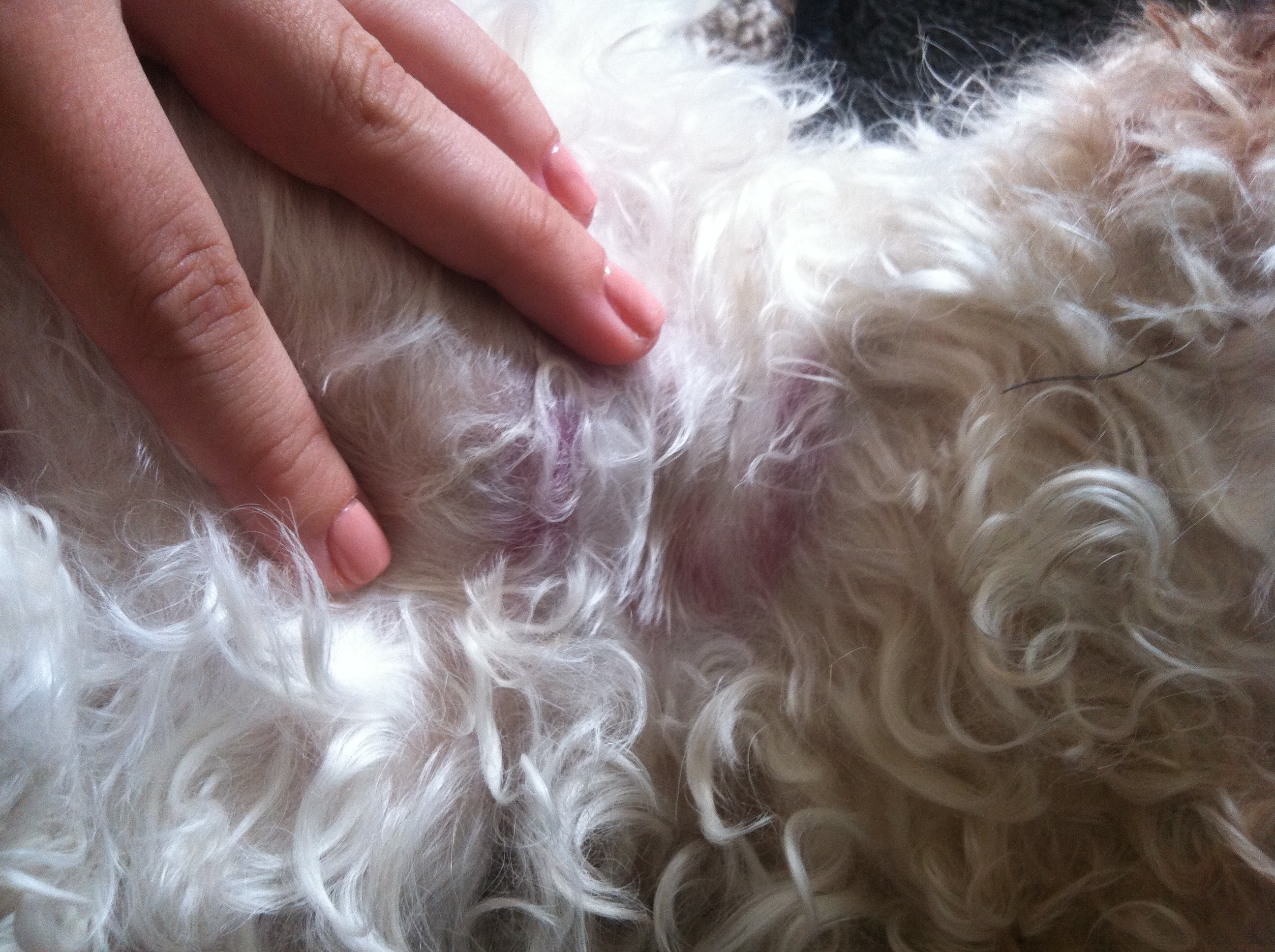
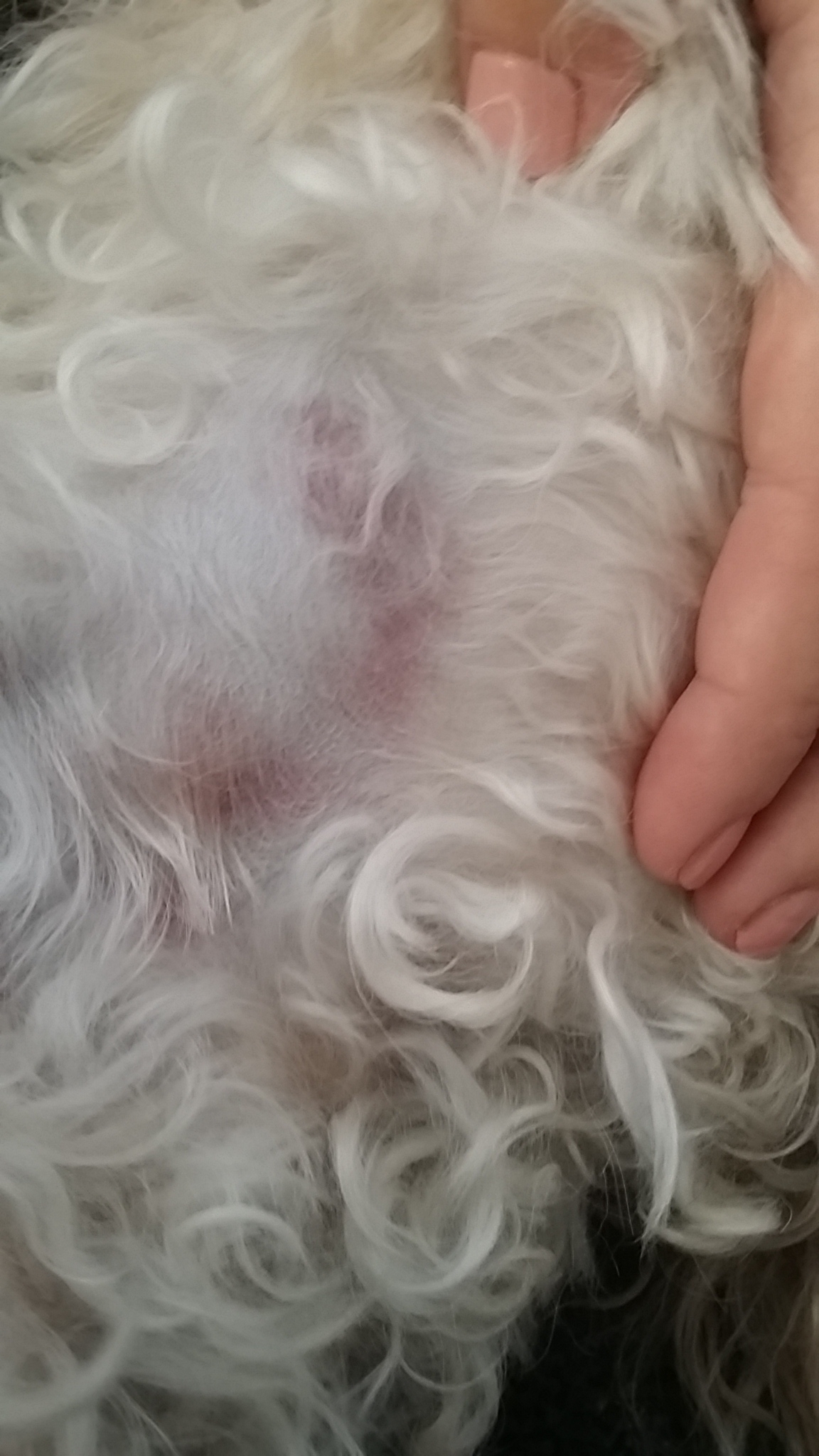
Good about the cephalexin. This will work quickly so Tiger doesn’t end up looking like a golf course!
I asked Dr Dodds about the freezing of cyclosporine caps and she said she never heard of this and in addition the manufacturer states on the packaging to not allow it to freeze during storage. Just give it with food for a few days to get him used to it. Most dogs in the study needed this to adjust to it. After a few days try it without food 2 hours before a meal and see how he does. In general this is the only side effect of this drug in dogs. That high dose is really making him queasy. But it will save his life.
My best
Patrice