Forum Replies Created
Karyn,
If his heart rate has been fluctuating there may be some extra risk during the use of anasthesia. Hopefully your clinic uses an anaestheologist during complex surgeries.
At a PCV of 15 there may still be ongoing hemolytic (destruction of RBC) and this may increase the risk of DIC dissimenated intravascular coagulation. This is a cascade of events that leads to abnormal intravascular clotting. There are signs this is occurring and there are certain emergency protocols that can be used to attempt to damp this process. Regardless it is considered an emergency during surgery.
Don’t be concerned if he refuses to eat. The drugs used for anasthesia have a side effect of decreasing appetite. It could be 1 even 2 days before he feels like eating. Think of it this way, if this were a human they would be in ICU and they would have a restricted food intake.
I think it is marvelous that you have arranged to take time off from work to care for him! From experience I believe you can expect the incision to begin healing in about 3 to 5 days. But it will be 10 days before it is healed well enough for increased activity.
Please keep in touch if you can to let us know how it is going.
My best Patrice
Chance had to have his spleen removed because he had a huge growth on it. It was an emergency and I wasted no time.
I am only concerned about vets who research older material like text books where it used to be considered a first line treatment to stop RBC destruction. Now there are better drugs and protocols and the role of the spleen is better understood.
The surgery can be very tough on a extremely anemic and deconditioned dog. The blood loss is significant because the spleen stores a lot of blood.
So, I think we all agree that this is not a decision to be made without a discussion with the vet about why the pluses outweigh the negatives. Having donor blood ready is a smart move.
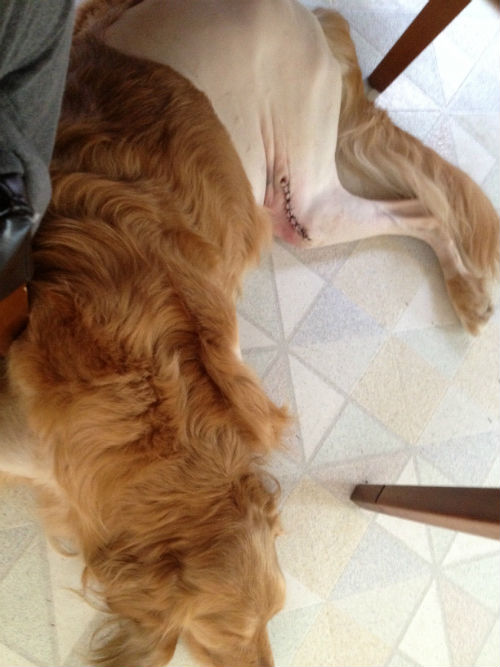
I brought Chance home the same night but you probably want to consider letting him stay overnight if they are staffed. Chance developed a bleeder and had to return in the morning so they could open him again and tie that bleeder off. By then he had lost a lot of blood and needed a transfusion.
My best wishes for a speedy surgery and recovery with no problems!
Patrice
Karlexx,
I’m sorry Louis is having a hard time with the cyclosporine. Chance also experienced this at the higher doses. It behaved like he was experiencing a psychotic episode. He would stare into space for about an hour after his initial high loading doses of 225mg (he was 90lbs) for about 3 weeks. We were using Dr. Dodds pulse dosing which is dosing M-F and not dosing on S-S. Once we began to see some positive changes in his CBC, we were able to decrease that dose. He was fine on the lower doses for a long period of time, months.
If we asked Dr. Dodds, and I have in the past, she would advise two temporary solutions. First, for a week or so, go ahead and dose with some food, this helps with the gastrointestinal side effects. Most dogs do get these side effects during the first exposure to cyclosporine, but they will diminish after a short period of time. Most dogs do adjust in about a week.
These known side effects were documented during a complete trial done on dogs by Novartis when Atopica was preparing to be marketed. Go to this page and click on the picture of the Atopica brand symbol to open the product insert where you can read the complete information about dosing dogs with cyclosporine.
https://www.secondchanceaihadogs.com/medication-resources/#mg
Secondly, first check with your vet about what I am suggesting. Try lowering the dose temporarily for about a week. That will depend on what size capsules you bought. For Chance, I had bought 100mg packages plus 25mg packages. If I had wanted to temporarily decrease his dosage I could have used one 100mg capsule plus probably 3-25mg capsules to get him down to 175mg for a short period of time. And then I would have increased in increments of 25mg to get him back up to 225mg. Does this math make sense to you?
As it was, since he was pulse dosing, taking no cyclosporine on the weekends, that was sufficient for him to adjust to the very high dosage. If your vet insists on dosing 7 days a week then these two adaptations I am suggesting will help him adjust to the cyclo.
If you see bloody diarrhea, call your vet immediately. They may decide to halt the dosing entirely.
This is really a very safe drugs for most dogs, only a few ever have any serious side effects. Novartis developed the dosing specifically for dogs with severe allergies and the use with autoimmune conditions is considered “off label.” In other words, Novartis has not done a trial on dogs that have AIHA, IMHA and therefore they do not market it for this use. That doesn’t mean that it can’t be used for this purpose, in fact plenty of veterinary clinics use it for many different autoimmune conditions, only that Novartis is not allowed to market it for those conditions until they perform a second trial. That would be expensive and far more complicated for them to administer. They are probably satisfied at this point with the profit from marketing it for canine allergies.
Interestingly, the dosing for allergies and autoimmune conditions is very similar. This drug works by reducing the number of T-cell lymphocytes. These white blood cells are responsible not only for initiating canine atophy (inhaled allergies) but they are also the cells responsible for the autoimmune attack on red blood cells in AIHA and IMHA and even bone marrow failure. So once you have achieved this reduction of cells, whether for allergies or AIHA IMHA bone marrow failure, the drug has been successful. Thus the similar dosing.
my best
patrice
Some breeds, like sight-hounds, do have extraordinary requirements for high levels of blood oxygen for racing so they will have very high normal hematocrits, upwards to 65%. I would not necessarily put the Corgi in that category. But each dog does have a level where they settle into that is “their” level.
Polycythemia is the term for an abnormally high red blood cell count. In some cases this is simple case of dehydration when the sample was drawn. A proper blood draw should be taken after at least an 8 hour fast to insure that fat in the blood will not interfere with the test results (lipemia). However, dogs are notorious for avoiding water if food is being withheld. So you end up testing a dog that is literally dry as a bone. And dogs on prednisone are even more prone to be extremely dehydrated. So if you are following me, each blood element is considered a percentage of the whole sample. Remove a lot of the fluid from a sample and the red blood cells seem like they take up a greater percentage of the sample.
There is one disease called HGE that has a symptom of an extremely high hematocrit, well over 65%. That of course would not be the case here however.
More than likely he was a bit dehydrated that day. If you will send me the CBC and the chem screen I can tell you what I see.
I think we all wanted to get the same dog back that we went into this disease with. Chance, at heart, was the same. But there were physical changes that were apparent to us and some of those changes were to his physiology. Afterwards his normal hematocrit was always about 3-5 points lower than his PCV and this was considered his normal after that. So we would get normal readings of 32% hematocrit and 36% PCV. That is not usually considered “normal” for dogs. (He also developed some interesting gray streaks in his coat.)
So how did I know that was his normal value? The body wants to maintain a homeostasis at all times. The kidneys are constantly monitoring the messages from the body about the need for oxygen. If they hear any complaints from body cells that “hey we need more O2 down here NOW!” they release an important hormone, erythropoietin (EPO), that signals to the bone marrow, “Make more baby blood cells NOW!” These cells are called reticulocytes. They are released early into circulation in the hopes that they will mature quickly and take over the important job of carrying more oxygen to the body cells. So you may see a value of 2% and 150,000 for instance.
The math behind the release of reticulocytes and the level of anemia is VERY exact. The body knows -exactly- what it is doing and how many red blood cells to make.
If there is anemia (< 38% HCT) and the number of reticulocytes is above 60,000 absolute (1%) then we call that regenerative anemia. Good thing, replacing old worn out red blood cells. This happens every day of our lives, old RBC die and are recycled, new reticulocytes are made.
(Regenerative anemia is a good thing unless there is hemolytic anemia, then we think of very high levels of reticulocytosis as a rather ominous sign, a lot of red blood cells are being destroyed.)
When there is anemia and the number of reticulocytes is less than 60,000 absolute (<1%) this is called non-regenerative anemia and is a very ominous sign that something is wrong with the process of the kidneys signaling the bone marrow. Either a problem with the kidneys or the bone marrow or perhaps one of the contributing factors like nutrition or thyroid.
*So if we look at the values for the hematocrit (and the PCV) and evaluate them in relationship to the value for the reticulocytes we can figure out when the body is really happy with where it is at. *
So Chance, even with a HCT of 32% and a PCV of 36%, his reticulocytes were sitting really pretty at around 1%, 60,000 absolute. Both the vet and I knew that this was a fine place for him to be. Whenever I had a CBC done, I also had a PCV done, but the first thing I would look at on any of these tests was the reticulocytes, considering that Chance’s illness had been autoimmune bone marrow failure. So looking for 60,000 and 1% is the key.
So we could take a look at Cody’s earlier CBC reticulocyte value and determine how satisfied the body was with where it was at. So that higher HCT value could be perfectly normal. I would like to see his current CBC’s and chem screens to compare certain other important values that tell a story about hemostasis.
You mention infection and that is certainly a trigger for loss of homeostasis. Sometimes when there is chronic inflammatory disease, the body will conserve and create a state of anemia. This is called anemia of chronic disease and it is related to the conservation of iron stores.
After all the stuff I have said above, don’t get too hung up on numbers, they are interesting to me and I like studying them. But the really important indicator is how does Cody feel? Is he perky and interested in the household, pottying ok, eating well, barking at the usual stuff? These are the signs that you see that your vet will not necessarily be aware of the differences.
If the blood work is beginning to look more normal, he is stable and appears comfortable , then yes it would be time to make a small adjustment in his prednisone dose.
I really do remember how eager I was to get Chance below 80mg a day. Dr. Dodds was eager too. But I went very slow. I think I dropped him to 75mg for about 4 days, then 70mg etc, each time checking with Dr. Dodds. But it was MONTHS before I got that drug, alternating with decreases in cyclosporine, down to insignificant doses.
I was extremely focused when I was caring for Chance, oblivious to many other things in my life. I stayed up all hours of the night studying hematology. He was so ill that I had to put my feelings away for a while and just focus on him. I would take a solitary walk on my dinner hour and allow myself to cry a bit, but that was where I kept it. My husband was a great help, not really understanding the science of it, but helping with the numerous doses of medication Chance needed nearly around the clock. Having a family member who is helpful like that can make all the difference in success.
I really like that you are thinking about this in a critical way. That is so important to some of us, to UNDERSTAND the science of what is happening. It puts us in charge of the treatment, makes us partners with the vets instead of helpless owners. If WE make a decision we make the best one for our dog. There can be no second guessing those kinds of decisions, no matter the outcome.
my best
patrice
Amy,
Go back to this post and re-read my math on this. I show you how to do a 25% per week reduction.
https://www.secondchanceaihadogs.com/forums/topic/4mo-pup-imha/page/13/#post-16165
my best
patrice
Carol,
I am so sorry to read about Libby. This is frightening experience for you and having to work just makes it more stressful.
But you have both done the right things! Good job Mom and Dad and thank you to your family as well.
The drugs should begin to work fairly quickly. I suspect they also gave her a shot or two of dexamethasone, a very strong immunosuppressive, while in hospital. The prednisone is a significant immunosuppressive at higher doses. One side effect you need to think about now is that it can cause stomach ulcers. If you were not told this and weren’t given any meds for this, go to the store and get a bottle of generic pepcid (not the advanced version) and give one tablet about 30 min before the meal in which you will give the prednisone. This will reduce stomach acid.
The doxycycline is an antibiotic and was probably given on the suspicion that this could be related to a tick disease, as this is the only drug that treats most of them. A few of these tick diseases can cause the symptoms you are describing. This drug tends to make dogs feel very ill and can also lead to stomach ulcers.
Give this with a very special treat halfway through a meal. Make sure you wash your hands after putting the doxy inside the treat, it is a very bitter drug and dogs will refuse to eat anything that tastes like doxy. Many folks have success with making a tiny bread sandwich with some very smelly food inside. Carefully drop the doxy onto the smelly food, wash your hands and then roll it up. Offer it while Libby is eating. A greatly loved treat at my house is warm deli chicken (no skin).
Mycophenolate is another immunosuppressive drug that is marketed to help humans avoid transplant rejection. Its use tends to be as an additional drug with other immunosuppressives, not entirely successful on its own but an excellent maintenance drug. It is also called CellCept. This drug is marked for humans but is used in veterinary clinics in some AIHA IMHA protocols. It can cause diarrhea in some dogs.
There will be a natural decrease in the PCV HCT after a transfusion. Small changes are not worrisome. If Libby can hold herself above 15% I would consider this a good sign. Be prepared to do another transfusion and talk with your vet about planning this ahead of time so there is no last minute emergency. They will need to take tests to ensure the blood donation they use will match properly. The first transfusion is free of reactions, the subsequent ones are not.
The side effects of the drugs can become worrisome to you and it becomes hard to sort out which one is from the disease and which one is from the drugs. But let’s be proactive and try to avoid the development of ulcers from the prednisone and doxycycline, ok? You can give one or even two pepcids a day safely.
The last advice I want to give you is to call your vet now, if you can, and ask about the use of low dose aspirin to avoid any emergency blood clots. This is a very critical time for those to develop, and low dose aspirin will help reduce this serious risk. We have been helping owners a long time and we tend to see vets forget this very important treatment. If asked they may say something like “oh, you know that is a very good idea, lets do that.” We can hope. If they offer something more exotic like heparin etc, then agree to it.
my best
patrice
Amy,
When you get down to the lower doses of prednisone they are not necessarily immunosuppressive anymore but rather the reduction is done to help wake up the adrenal glands. These lower doses are considered anti-inflammatory and are used for conditions like skin allergies or arthritis.
So the objective is to help the glands wake up properly. The task is to provide the body, as best as you can, the amount of cortisol the adrenal glands would produce each day if they were healthy and working properly. Since each dog is different, the dose can be different from one dog to the next to help wean the dog from prednisone.
Stress is the trigger for the body to release more cortisol. For humans that might be seeing another car coming straight at you. But for a dog stress can be as simple as you get up from the chair to answer the door bell, your dog will react quickly and with extreme vigor. The cortisol stimulates the heart and lungs to ready it for fight or flight. I am sure you have felt this on a few occasions as you react to stress.
So what if the adrenal glands are not working very well yet and the door bell rings? If your dog doesn’t have enough cortisol at this point, they could jump up and feel very weak. They could be a little dizzy or the worst is they could collapse.
Please read my guidelines for prednisone reduction:
https://www.secondchanceaihadogs.com/AIHA_Terms/prednisone-dose-reduction/
You can be the judge of how your dog is reacting to the doses of prednisone you give them. When you get to lower doses like this, try to simulate as best as possible the normal doggie day by giving the dose in the morning. So 5mg in the morning would be fine to try. If you see what you think is listlessness, give 7.5mg. That would be an additional half tab.
Eventually your vet will want you to attempt to go to an every other day dose. To do the math properly, average out the daily dose by adding up the doses over 10 days (to make the math easier) . So 10 days x 5 = 50 mg. Now take either 25 or 33% of that.
So lets try 50mg x .66 = 33mg. (33mg / 10 = 3.3mg per day.)
50mg x .75 = 37.5mg (37.5mg / 10 = 3.75mg per day.)
Pick something close you can dose with. If this were me I’d go with buying 2mg pills and give 4mg every other day either all in the morning or giving 2 mg twice a day.
So if there are issues with weakness, collapse etc, you could add another 2mg pill to get 6mg every other day (so maybe 4mg in the morning and 2mg at night). The objective is to not to half the total weekly dose suddenly but make an average decrease over the week by 25%.
Once you have read the page I linked to carefully you will know what side effects to look for. You can do this, it’s not hard. Watch your dog’s behavior closely.
I should also note here for anyone else reading this. When you decrease prednisone you may see other conditions suddenly become worse. That can be confusing and make you think that this is a bad reaction to the lowered dose.
Conditions like arthritis for instance respond well to prednisone and removing the drug makes the arthritis return.
Skin allergies can also be suppressed during high dose use and suddenly become very bad when the dose is lowered.
There are many conditions like this that are treated with prednisone that can return when the dose is removed. Try to anticipate this will happen and work out another way to treat these other conditions.
For instance allergies respond very well to Atopica and that would be a valid use of this drug. It doesn’t interact at all with the prednisone, but rather would take the place of the prednisone’s anti-inflammatory behavior.
my best
patrice
Jordan,
Baytril is not very effective against tick diseases. Did the vet say why they prescribed this? Baytril is commonly used to treat bacterial infections of skin and urinary tract or kidney infections.
Some dog clubs are using unique combinations of Doxycycline and baytril to treat various tick diseases but those doses are very high for long periods of time, 1-2 months. However this is not a standard in veterinary clinic use.
There must be something I don’t know about this yet.
I still don’t know if they tested for tick diseases.
My best Patrice