Forum Replies Created
Hope,
I am so sorry to read this. You must be very frightened.
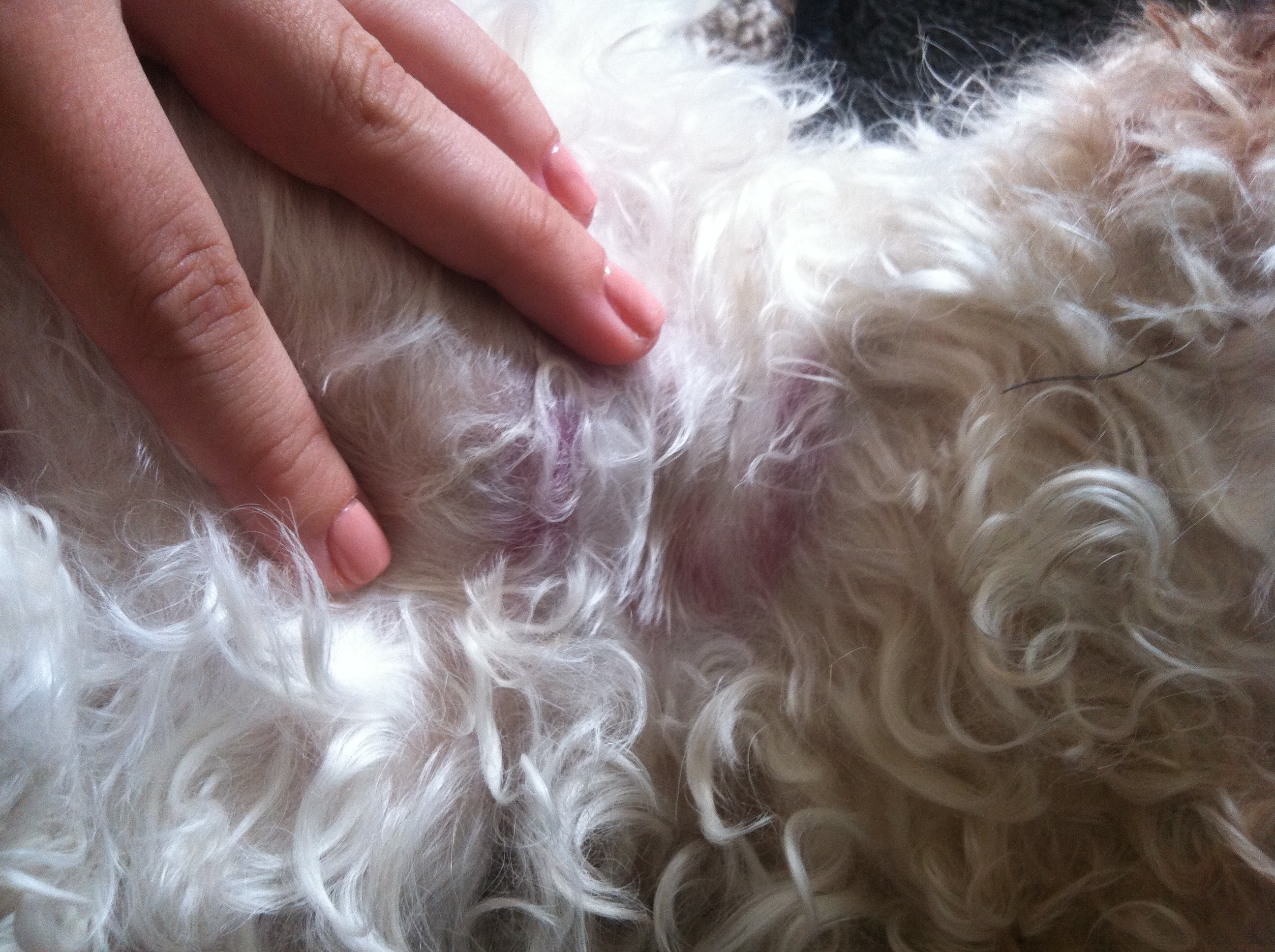
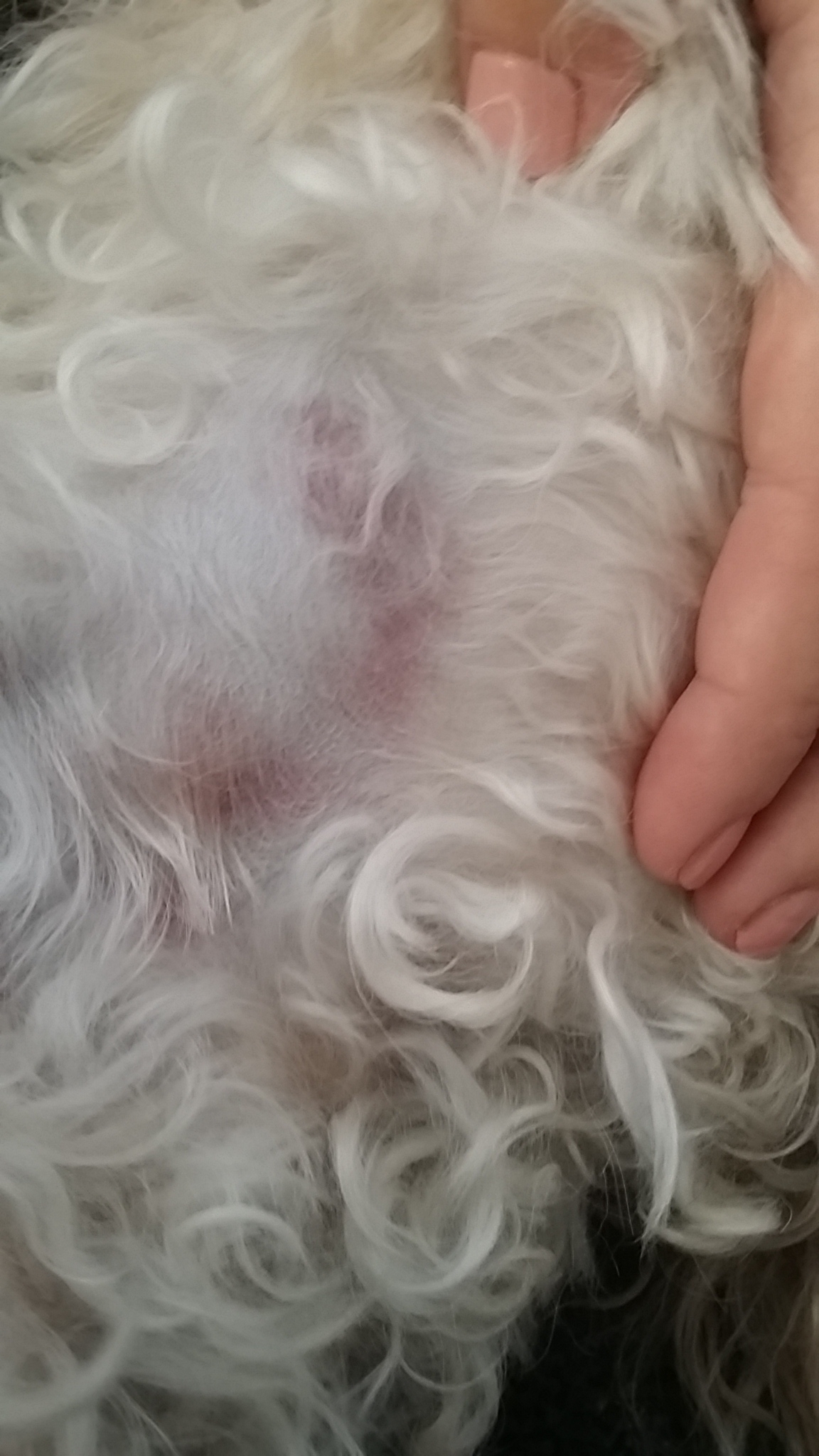
I am suspicious that this is a staph infection. Many dogs will develop these skin infections when they are on high dose prednisone because this drug is being given specifically to suppress the immune system. Chance would get them and he was constantly on antibiotics.
We all have staph bacteria on our bodies. We throw off infection all the time without even knowing we did because we are healthy. Steve’s immune system is not in a condition to do the came thing.
Staph infections usually look like a reddish spot that has a yellowish exudate.
If you can get a very good picture of this, upload it via the photo uploader and I will take a look.
my best, patrice
Vally,
This is an interesting and puzzling (and frightening) thing happening to Bingo.
Let me tell you about Chance and see if this sounds familiar to you. After he recovered from treatment for his bone marrow failure he returned to relatively normal life. For about 2.5 years he was fine but then he started having similar symptoms. He started “tipping over” while walking. He would act a little dizzy and then down he would go. He would sometimes paddle his feet and cry out.
Of course I started with my local vet. The chest x-ray showed an enlarged heart. Immediately we saw the specialist. He did a variety of tests on the heart, including an echocardiogram. He was diagnosed with a mitral value deficiency and an arrhythmia. This would eventually worsen and would lead to congestive heart failure. He put Chance on several heart medications and he improved significantly.
Over several visits, and with more information from me, the specialist and I talked about these collapses. I had taken a video showing Chance doing this and he confirmed what I also felt, though this looked like it could be a seizure, it was not.
I described that I had noticed this seemed to be preceded by several things, one of which was taking a large drink of cold water. Then he would cough or gag and then a short while later he would collapse, just as you describe. He would also set himself off by barking.
So the specialist gave me a veterinary research paper that described the effect that the vagus nerve can have on a dog’s heart. This large nerve runs through the neck. In particular, with the anatomy of a dog, this nerve runs more horizontal than it does in a human, under the neck of the dog, where it can be compressed. Coughing (or eating) can lead to more pronounced pressure on this nerve. This stimulates this nerve in a variety of ways.
“Vasovagal syncope occurs in response to a trigger, with a corresponding malfunction in the parts of the nervous system that regulate heart rate and blood pressure. When heart rate slows, blood pressure drops, and the resulting lack of blood to the brain causes fainting and confusion” (This is simply describing fainting!)
There is a significant list of things that can trigger this response. But one in particular of note is “Violent coughing.” We discussed Chance drinking cold water, followed by coughing or gagging or perhaps his barking and how that could be causing this vasovagal syncope.
There is a significant difference between seizures and syncope. A seizure takes longer to start, during this time the dog seems less alert. During the seizure the dog is most likely not alert at all. They may take a long time to recover after a seizure. A dog that has a syncope can be walking along fine, begin to wobble and down they go. They can paddle or vocalize (which may happen in seizures) but if you look in their face you see they they are conscious. After only a brief time they will recover, get up and continue on as if nothing happened. This was Chance. Down in an instant and a few minutes later trotting home again like nothing had happened.
We agreed that this was the most likely cause of his irregular heart rate and the reason why he was having these frightening episodes. I was also approached by one of the vets at my clinic who explained that she had this condition and she had to be careful herself about compressing this nerve or she would go down in a heap.
The dog’s heart is quite close to the throat and when it enlarges, it can actually compress the neck and that is why coughing is one of the first signs of canine heart conditions.
So our goal was to treat the fluid buildup around the heart, helping it to reduce size to normal. I also started giving Chance tepid water, no more cold drinks. I also reduced the amount of water he could get at one drink. Giants can drink an incredible amount of water!
You are right on about the use of a harness. If this is what is happening with Bingo, it probably reduces the compression of the neck as well.
So it might be a wise thing to have your vet do a bit of a heart workup in the office to see if everything sounds good.
Even without a heart problem, a dog’s anatomy can cause abnormal compression of the neck. It might be good to reduce the amount of water and food he can get at one time so there isn’t a lot of gulping and stimulation of the neck. If this were me, I might try to slightly elevate the food bowl to avoid severe forward bending of the neck.
There is no specific test, only using a 24 hour Holter Monitor can possibly pinpoint this because the owner keeps a diary of each activity and can note when there was a collapse. We used this with Chance but he didn’t have an episode during the time he had the vest on.
If you want to read about it:
http://en.wikipedia.org/wiki/Vasovagal_response
This is a somewhat complex paper about this condition in small dogs:
Read this article directed towards owners:
http://www.vetspecialistsofsfl.com/cardiology_articles_Syncope.html
If any of this sounds like it could be the issue, take these papers with you to your vet so that they can see you understand this condition. They may be able to say one way or another whether this is the case with Bingo. They can help you treat any possible conditions that are contributing to this.
my best, patrice
Hope,
When I was reducing my prednisone dose, I could sleep at the drop of a hat. If you know anything about Dr. Who, I fell asleep one night during an episode. That is unheard of.
Mark took me on a bicycle trip and I could hardly peddle. I have never felt so weak in my life.
Let him sleep.
my best, patrice
Hope,
Chance used to pant quite a bit, even when lying down, because his liver was very enlarged from the prednisone exposure and it was uncomfortable for him to lay on his side pressing against it. He had stopped getting on the bed or couch he was so uncomfortable.
You can check the breathing rate. 10-34 breaths per minute, unless panting.
Another side effect of high dose prednisone is a reduced ability to moderate body temperature. Try putting some fans around on the floor. Lay a folded blanket down for him to lie on next to the fan. Chance’s elbows got raw during this time as the prednisone made his skin very delicate, so just my own warning, Steve’s elbows may be fine.
Try to think of every mechanism in the body that controls things like respiration, heart rate, digestion, blood sugar, muscle contractions, nerve impulses etc as being hampered by the excess cortisol. It’s like being on alert all day all night long. Imagine that feeling you get when you almost have a car accident and how you would feel if that was all day long. Ugh.
That is a good sized reduction, but if it is necessary then so be it. If he was able to recover nicely from the mailman incident then that is a positive.
I wouldn’t necessarily worry about the gums being colored differently but do mention it to your vet. Many dogs have colorations of their gums that makes them variegated.
Here’s a test for everyone reading this. Check your pet’s gums. Does anyone see black gums? Ha. I panicked the first time I saw that in Chance. But after a quick survey of all the other Giant Schnauzer owners on my GIANT list, I found this seems to be a breed characteristic. Nothing wrong there, but can be hard to tell if the gums are ok!
Willie also has a number of black spots on his tongue call Donnerthal spots. This is just a collection of melanin in the skin, inherited. Many dogs have these and so do cats. Search google images for either Donnerthal spots or dog black spots on tongue.
I got really good at evaluating Chance’s color by just looking at his ears. When he was at his worst, those ears were gray. Also you can pull down the lower lid of the eye and check color there.
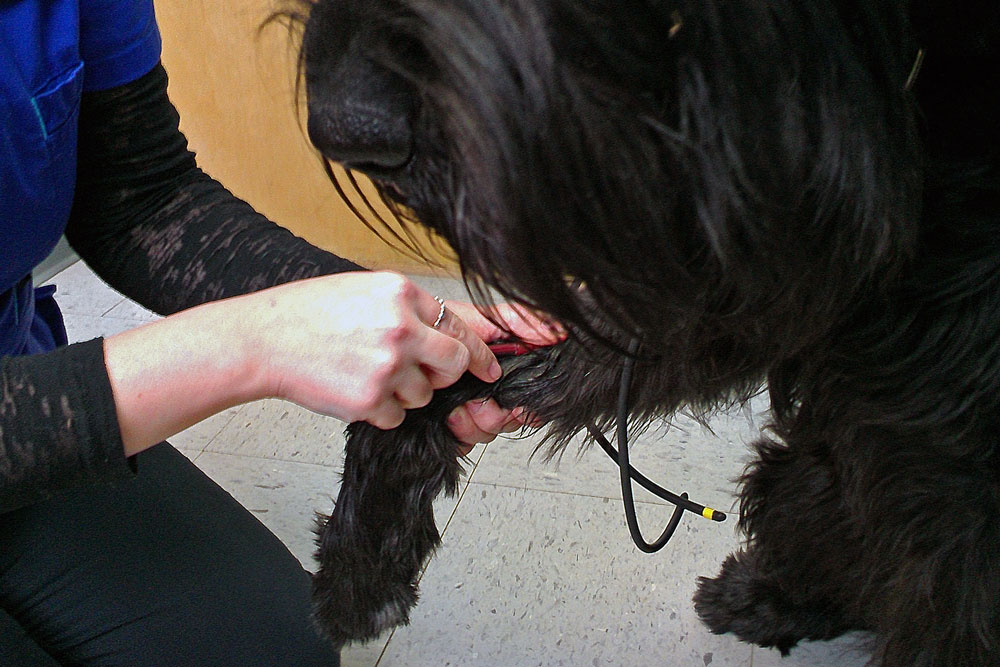
To check for appropriate capillary refill, press your thumb on the gums and hold. Then release. The gums should fill up pretty quickly. The normal response is one second or less. More than two seconds may mean poor circulation. When the thumb print stays pale for three seconds or longer, the dog is in shock. Try that on both sides and see if Steve’s gums are responding the same on each side. Make it fun for him by putting something good tasting on your thumb ;-}
To check blood flow in the body, test the temperature of each paw. All the same or is one really cool to the touch?
To check heart rate, have your dog lay on the right side. Bend the left elbow up onto the chest. The elbow marks the location of the heart. A dog’s heart DOES NOT beat at the same pace as a human’s, don’t get upset if you feel it pausing! This is due to an inspiratory pause (during breathing).
To count, try to do it for at least 30 sec to account for this pausing (and then double the number). When you count upwards of 200 beats per minute your dog is having trouble. I would say around 60 to 160 beats per minute is considered normal, slower in large dogs, faster in small dogs.
my best, patrice
Hope,
If he were to significantly drop in PCV in one week, it would be most likely due to a re-occurrence of autoimmune hemolytic anemia. All the signs of that would be apparent, very pale gums, weakness, dark urine and/or stools, loss of appetite. Reading your descriptions of his treatments and recovery makes this appear to be less likely to occur. However, no one can guarantee. Can the PCV drop a little in the next week? Sure, the body is still recovering and the process is not running smoothly yet. If you go back next week and you get 37%, that is still quite mild anemia.
If a relapse did reoccur, then they would have to put him back on a high dose again and also step up the dose on the other meds. The immune system would need to be suppressed again.
Does this happen? Sometimes. We have seen more dogs that have had ITP (destruction of platelets) relapse.
You do need to work closely with your vet. If you are worried in the middle of the night you can also reach out to us, there is always one of us awake and watching the website, we literally span the globe. We can help you think through what you need to do.
Please try not to worry so much, I know hard to do, but when you do you telegraph that to Steve and he picks up on it. He thinks he is doing something wrong. Go back to your normal routine, modified, and approach everything as though it were going to be normal. But give him plenty of quiet time. Keep guests etc at a minimum. No trips, no exposure to other dogs. Simple diet.
my best, patrice
Hope,
The adrenal glands atrophy over time when we administer a high dose of prednisone. This can cause Iatrogenic Cushing’s Disease.
Iatrogenic means “of or relating to illness caused by medical examination or treatment.”
Cushing’s Disease, which is essentially an excess of cortisol in the body, does occur in dogs due to organic disease, such as a tumor growth on the adrenal glands.
But the symptoms for both are pretty much the same, excess cortisol causes multiple unwanted side effects and over time can lead to serious health issues.
Dogs with Iatrogenic Cushing’s have two small atrophied adrenal glands. I can’t say always, but in just about every case I have seen in the past, dogs seem to recover the function of the gland once the prednisone is reduced.
The desired result of decreasing the prednisone is to get it down to a level that matches what the body would produce for itself. Once you reach a certain dosage, (and that varies according to many factors such as weight etc), the prednisone no longer provides the function of immunosuppression. At that point it is merely attempting to replace what the body would need throughout the day to respond to stress. (And remember stress to a dog can mean anything even mildly stimulating.)
At that point there is a challenge to the body during stress that requires cortisol. There are intricate systems in place that provide the feedback that this is needed and a message is sent out to the adrenals to respond. If they are atrophied, they may receive the message but not be able to respond at all or very little. Over time, as you decrease, they will begin to respond better.
So the tricky part is determining what the lowest dose of prednisone is that begins to challenge the adrenals. The accepted practice for most dogs we have seen is to decrease about 25-33% every two or three weeks. When you reach lower doses that are not immunosuppressive, a schedule is started that is kind of like “training wheels” for the glands. Dose every other day for instance.
The goal is to wake the glands up but also make sure that your dog has enough cortisol to properly respond to stress. Most every dog is going to feel fatigued. They may be reluctant to go for a walk. What we worry about is if they cannot respond to excitement well. If they are suddenly on alert and the body cannot get the message out “increase blood flow, get more oxygen to the brain and muscles, slow down digestion” they may jump up in response to their alerted nervous system and then collapse. Have I ever heard of a dog doing this during these reductions? No. Is it possible? Maybe.
How long does this take? Hard to say because each dog is different, just as humans who go through this are different. I have done this decrease. I felt just awful. And I had only been on prednisone for about 3 weeks.
So the best way to approach this is to follow the instructions your vet gives you carefully. I think once we describe this to owners they understand the need to reduce carefully. What would not be good is if an owner decided to go cold turkey and stop it suddenly.
Some dogs also may have other conditions that have been responding to prednisone. Arthritis, colitis etc improve with prednisone. Reducing the med will make these conditions worse again. So not only is your dog feeling weak, they are also feeling more joint pain or having digestive problems again. You may think that your dog is relapsing! It is so hard to tease out all the influences prednisone has on the body.
my best, patrice
Hope,
This is not unusual at all. This has to do with a dog’s spleen.
The spleen in a dog is a bit different than in a human’s. My vet says it provides the function of an “instant transfusion.”
Dogs, as you probably know, tend to live their lives either totally sacked out or in a state of huge excitement. There are very few times when they are not paying at least some attention to their environment. And they can go from sacked out to ballistic if the door bell rings or they see a squirrel. When they are sacked out a lot of blood can be stored in the spleen. So much that they can sometimes have a condition called “nocturnal anemia.” Or, there is so much blood in the spleen that the circulating amount would be considered anemic.
To help them with this amount of arousal, their nervous system prepares them quickly for fight or flight. By now, most people understand that when we are stimulated like this our stress level goes up. Our body must respond to this fight or flight by preparing itself to provide more oxygen, greater blood flow and alerting the nervous system. Dogs are no different. The main stimulant is a form of cortisol that the adrenal glands produce.
The spleen provide several functions. One is simple blood storage. Another is that it is responsible for removing old worn out blood cells from circulation. It does this by forcing all that stored blood through tortuous pathways. The old cells can’t navigate well and they break apart. The parts are scavenged and either reused or eliminated. We see the heme, the iron molecule that carries O2, in our stool as a brown color. We destroy old red blood cells and make new ones everyday of our lives. The third important function is that the spleen plays an active role in our immune system. It’s a busy organ.
So dogs have very strong muscles that surround the spleen. Those muscles respond to stressful situations by squeezing the spleen tightly and releasing a great amount of blood back into circulation. This can happen very quickly.
So perhaps you can understand better how a dog can go from having pale gums to having bright red gums. It has a lot to do with the stimulation of their nervous system. Bright red gums are also evident when a dog is overheated. You can tell how dangerously overheated by how red they can become.
We worry about dogs that are undergoing a reduction in prednisone because the adrenal glands have been “asleep” while being flooded with excess cortisol. Yawn, why should I bother making this cortisol if you are going to overload me?? They shrink and are not as responsive to the stimulation.
We decrease the prednisone slowly so we can wake the adrenal glands up carefully. But at some point we do have to challenge them some so they can go back to work, and that is when we go to lower doses and every other day administration.We look out for “not doing well” and upwards to “instant collapse” as indicators that there is a disparity between the low pred dosage and the body’s instant needs.
Rapid reduction is sometimes necessary, if there are significant and life threatening side effects. My dog Chance was one of those, he had been on high dose prednisone for months before Dr. Dodds put him on Atopica. We had to get that dose lowered as quickly as possible because he was so sick from it. So there were days when I was quite worried about his adrenal response. It is not a comfortable time for dogs, but it is eventually necessary to get those doses lower.
So I am guessing that right now Steve is at a point where his adrenal glands are not very active due to the high doses of prednisone, you are lowering of the dose of prednisone and stressful stimulations are not being handled as well as they could when he was healthy. In other words the reaction to fight or flight is a bit hampered.
His gums are going to probably be pale when he is resting or sleeping. They should be responding with more color (his PCV is up around 36%, correct?) when he is aroused from rest or in stressful situations. “Hey let’s go for a car ride!” If they aren’t then watch him more carefully for other signs of not handling stress well.
You will get through this ok. You have a smart vet who knows very well how to decrease this med and Dr. Dodds has been doing this for many decades. Enjoy your time with Steve and be good to yourself.
my best
patrice