Forum Replies Created
Maura,
While this website is titled AIHA Dogs, it is also titled Second Chance, after my dog Chance who had bone marrow failure. While we talk about AIHA or IMHA most of the time, the reality is that a portion of the dogs that we help have this rarer form of autoimmune diseases: bone marrow failure.
The signs of bone marrow failure include a lack of proper regeneration in the bone marrow. What does this mean?
Each day, in every human and dog, we make new red blood cells in our bone marrow to replace old worn out red blood cells (that are replaced at about 120 days of life). We also make new white blood cells and platelets.
All three of these cell types come from the same stem cell, a template, that goes through various stages of growth to mature. See this diagram that shows this development:
https://www.secondchanceaihadogs.com/AIHA_Terms/hsc-hematopoietic-stem-cells/
In autoimmune non-regenerative anemia, which is what Maura has, at one of these stages of development, the immune system attacks and destroys these developing red blood cells. Look at this diagram carefully and you will note that this attack can be focused directly on the red blood cells, but it could also be directed at the white blood cells or even the platelets. So some very unlucky dogs have losses in all three types of cells, not just the red blood cells.
Why does this happen? The immune system is complex and researchers still study this trying to find answers. So what I tell you is from some of that research. Dr. Dodds has been researching and applying her knowledge of this dog condition for over 30 years.
Many things influence the immune system and can include:
Genetic influences, Pregnancy, Stress, Hormonal Irregularities, Nutritional Influences, Adverse Drug Reactions, Viral Infection, Frequent or Recent Use of MLV Vaccines, Underlying or Concomitant Disease, Other Autoimmune Disorders (such as hypothyroidism.)
This is a large list. Due to this complexity it is often not possible, even with a ton of testing, to find the CAUSE of bone marrow failure! What do we do? And remember, this can happen to humans as well. It can be slightly different, but in a sense it is the same thing.
Well, in humans we just can’t put them down. My vet told me that in humans, if they are not making blood, we give them transfusions and support them until we can figure out how to help them make blood again. This was a wise thing to say to me, personally, because I had been feeling that way about Chance but didn’t know how to express my feelings. Even as sick as he was, he still had a very strong will to live. He was still interested in his family, his yard (which included even barking and running at a squirrel) and in keeping Cassie “under control.”
So here is how Dr. Dodds views the diagnosis and treatment of these special dogs. We may never know, or at least understand the science, of why this happened. So don’t spin your wheels trying to understand it. It took me a long time to actually understand that and accept it.
So Dr. Dodds’ approach is this. In dogs (unlike humans) we can try out therapies to see if they work. Well, it’s not as willy nilly as it sounds. Dr. Dodds’ vast clinical experience has led her to understand what treatments work well. It’s that simple. She can try one on a dog and see if it helps. So that is exactly what we did with Chance, try her treatment to see if it would help. Then she said, if it didn’t, we could go on to further diagnostics or try other treatments.
The Atopica, the first thing we tried, worked. It was that simple. This was 2007 and I could not even find information on the internet for non regenerative anemia in dogs! But she had been applying this treatment, using cyclosporine, since 1988.
And today, long after her first use of this in dogs, cyclosporine is slowly becoming the treatment of choice, not only in dogs with non regenerative autoimmune anemia but also in dogs with regenerative anemia.
If you wanted to target the bad guys who are stealing in your neighborhood, you wouldn’t capture everyone who lived in your neighborhood, you would trap only the bad guys, correct? That is exactly what cyclosporine does, it targets the “bad guys” of the immune system ONLY. Prednisone and Azathioprine target the whole immune system and the side effects are very bad. So using Atopica has the benefit of less side effects. In particular Azathioprine works in a way that can lead to suppression of the bone marrow if used long term, so its not that great either for treating this condition.
So how long do you wait to see if this works? Well, there is no time table, but if, within say 2 months, there is no change, then you do need to look at other causes. Transfusions help while you wait and research.
How long can you go on like this? Well, certainly not indefinitely. In humans it is not possible to “put them down” so we keep them comfortable and support them as best we can, but they may die if the doctors can’t find a good treatment. In dogs, we do have the choice of compassionate euthanasia. Why? Well, at least in the US, dogs are considered property so the law allows this.
How do we feel about this, morally? Everyone has a different thought. We try to honor all those thoughts. We cannot tell anyone what to do. It is their choice alone. We can offer our stories and tell you why we waited, or didn’t wait, or how our dog failed during the treatment and didn’t survive. In some cases a family could not continue treating because of finances.
But the important part is that you understand the condition and you understand why you made the decision you did, one way or the other. If you do this you can be comfortable with your decision and not feel guilt. Guilt is a monster, it can destroy your confidence and lead you to make faulty decisions.
No matter what happens, the important thing is that you are with Sunny and that is all she understands. She does not “know” about death. She can’t fear it. She does not fear future pain. She lives in this moment, right now. Each moment that you are with her, are happy and love her, is all she needs to know or all she understands. She does not judge you. She agreed a long time ago to obey you in all things and your responsibility to her is to make good decisions. Make those decisions with a clear head and out of deep love.
my best
patrice
Maura,
What time is the earliest you get up in the morning and the latest you go to bed? I am helping Vally with your med dose chart. I need to know the window of time you have to give meds and if there are any periods of times when you are not home.
The jaundice is a direct relationship to the ability of the liver to clear bilirubin from the system. “Bilirubin comes from red blood cells. When red blood cells get old, they are destroyed by the body. Hemoglobin, the iron-containing chemical in the red blood cells that carries oxygen, is released from the destroyed red blood cells after the iron it contains is removed. The chemical that remains in the blood after the iron is removed becomes bilirubin.”
Yellow indicates a milder level of bilirubin. Right now the liver is stressed out by metabolizing the prednisone, one of its jobs. The liver is pretty cool, the cells can suffer the damage from metabolizing drugs and then new cells are generated to heal the liver. So, if there was no organic liver disease prior to this, the liver will most likely regenerate and return to normal once the prednisone is reduced.
You can help by using supplements that assist this process. There are several that are commonly used, not only in human medicine, but also in veterinary medicine. Sam-e, which is normally made in our bodies, can be supplemented to assist the liver.
And anecdotally, the use of milk thistle has known to also be supportive of the liver regenerating cells. Sam-e can be bought over the counter, but the sizes they come in are really too large for a little dog. And milk thistle can be bought at health food stores. The important factor in milk thistle is that it needs to be a quality product. How it is harvested, stored, manufactured and packaged makes a big difference in the potency.
Your vet carries Marin, a “pharmaceutical grade” version of milk thistle’s essence silybin. They also carry Denamarin which combine silybin and Sam-e. Both of these are dosed specifically for veterinary use. I used this with Chance and dropped his liver values from 80x normal down to normal within a month.
Once he was closer to normal values I also used Country Life Liver Support Factors for him and that is a high quality supplement that contains several ingredients that are very supportive of the liver. The cost is much less expensive but it was highly effective for the 1-2x higher values.
my best
patrice
Clara,
I found a number of references that discuss pulse dosing or “pulsatile drug delivery” that are used in specific treatment protocols. Here is just one that is actually referring to delivering drugs in a pulsed dose.
Journal of Drug Delivery and Therapeutics
PULSATILE DRUG DELIVERY AS MODIFIED RELEASE DOSAGE FORM : A REVIEW
“Pulsatile drug delivery is a advanced drug delivery system in pharmaceutical field. Pulsatile system is one of the modified release dosage form system and gaining a lot of interest as it is increasing patient compliance by means of providing time- and site-specific drug delivery system. Pulsed or pulsatile drug release is defined as the rapid and transient release of a certain amount of drug molecules within a short time-period immediately after a predetermined off-release period.”
my best
patrice
- This reply was modified 11 years, 9 months ago by Patrice.
Clara,
I am not sure why she responded this way. Is it possible she has discontinued this protocol? There is no question she asked me to use it for Chance, I have the protocol she sent me in front of me and the emails between us discussing how to do this.
“Pulse therapy means the administration of large doses of drugs in an intermittent manner to enhance the therapeutic effect and reduce the side effects. ”
Certain treatments, like cancer protocols or prednisone are given this way.
Here is the section in the protocol she sent to me in 2007:
Immune-mediated Hematological Disease and Bone Marrow Failure
W. Jean Dodds, DVM HEMOPET
snip>”For severe cases, other immunosuppressive therapy is given. We prefer cyclosporine (Atopica, or Neoral, or Sandimmune, 100 mg/ml oral syrup) instead of cyclophosphamide (Cytoxan) and give it at 10 mg/kg for 5 days rest 2 days, then at 5mg/kg for another 5 days. The lower dose is repeated after a 2 day rest on a 5 days on, 2 days off cycle as long as is needed (usually 2-3 courses of 5 days). This drug induces rapid T-cell suppression within about 48 hours and has been safe, effective, and well-tolerated at these doses.”
Hope,
Good to hear that you have a normal PCV! Excellent.
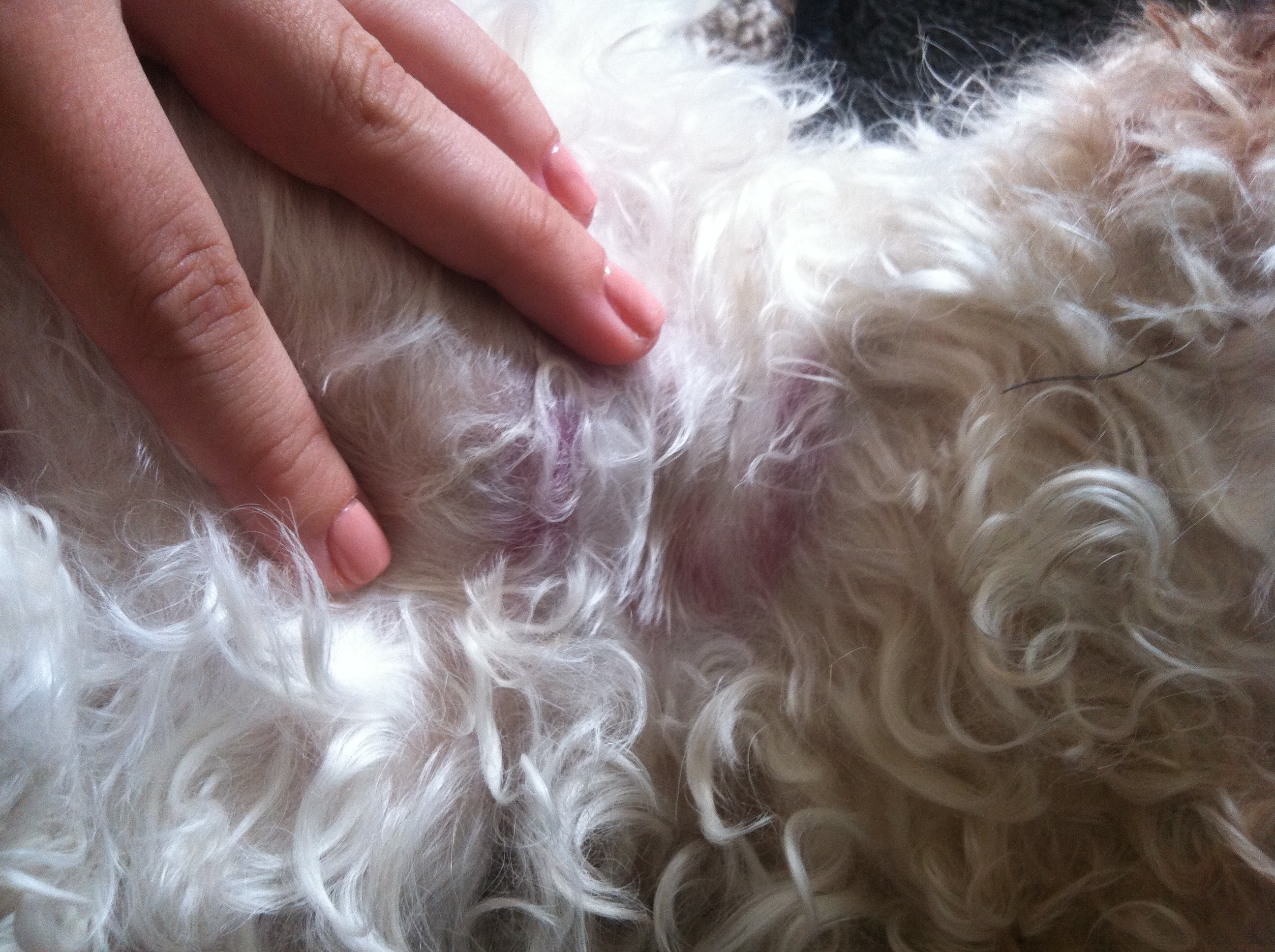
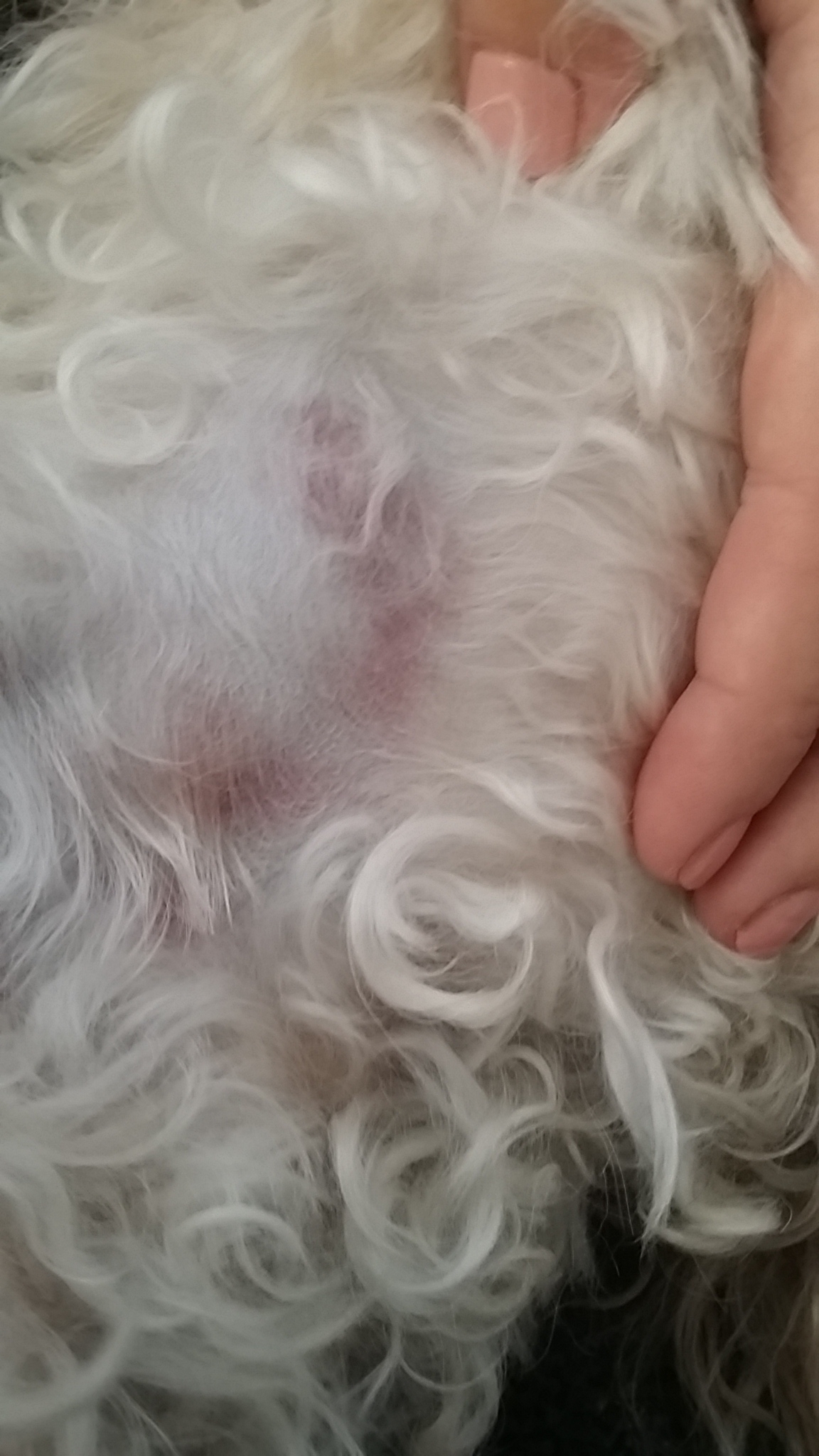
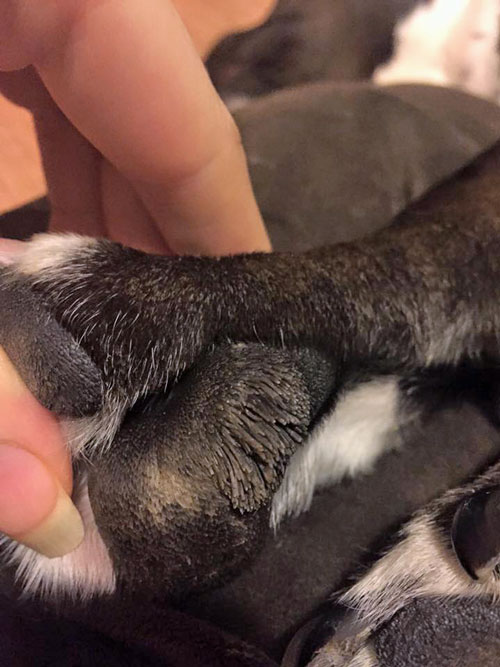
See if you can get me a nice tight shot of some of these things on his back.
Chance had some things on his skin the whole time we were treating him, some were large and did not look good.
He had not only stopped making red blood cells, but he was also not making white blood cells. This left him open to all kinds of infection. So he was constantly on antibiotics of one kind or another until the Atopica began to work and he could fight infections again. At one point he got a staph infection and I used Cephalexin (Keflex) which is especially good at clearing staph and other skin infections. Once that cleared we moved to a different antibiotic. We used different antibiotics at different times for different things, but the reality was that if we didn’t, he could have died from opportunistic infections similar to what AIDS patients get.
Some skin infections in an AIHA dog on prednisone can be quite serious, for example staph can develop into MRSA, a more dangerous staph variant. But for the most part, dogs that get skin problems during treatment will recover their coat and skin condition over time once the drugs are removed. Ask your vet if they think it is safe to use fish oil capsules now, that will help the coat significantly.
Here is a list of all antibiotics that are available to the vets for treatment. You can read the benefits of each one and why they are prescribed.
http://www.veterinarypartner.com/Content.plx?C=187&S=1
In general, it is always best to use the most targeted antibiotic you can that is specific to the particular thing you are fighting. Constantly using broad spectrum antibiotics is not appropriate unless it is an emergency. That may mean a skin scraping to pinpoint what you are fighting.
I think what you are seeing is one of several skin conditions related to Atopica. Chance had either benign histiocytomas or granulomas, and other things like staph or crusty dermatitis. Some of these will respond to topical treatments with medicated shampoos, your vet could prescribe something for that.
I think the important thing to know is that most of these are benign conditions and they are directly related to the immunosuppression activity of Atopica or prednisone. When we reduced his meds down to nothing his skin improved significantly. However, a few of those red raised cysts remained. They were not dangerous, just unsightly. When he had his knee operated on in the future, I asked the surgeon to remove the two worst ones on his back hip.
I know these things are so hard to look at. People may look at your dog and think, “why are they not caring for their dog properly? Chance looked like a dead rat, his coat was horrible, he was potty. I would take him for walks when he felt better and I would be so proud that he could be walking again, but I felt compelled to explain to people that he is getting better after being sick for a long time. I am sure they didn’t believe me.
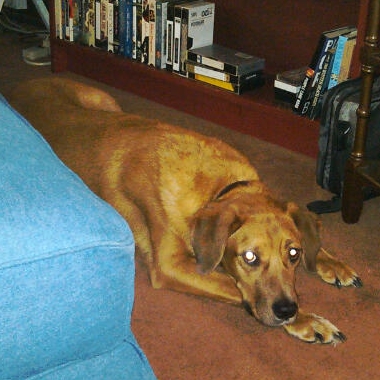
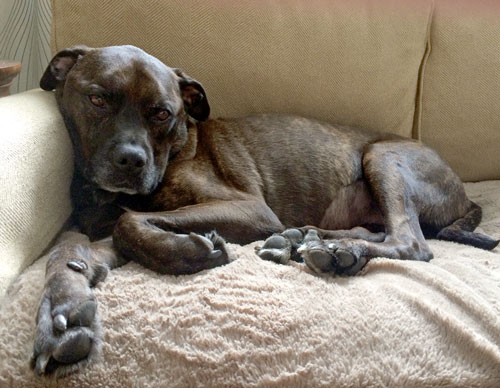
Look at the first three photos of Chance on this page. You can see what he looked like after being treated for 6 months, then a few months after he got better and finally a year after he recovered. I am positive you will see the difference in his body and his coat.
https://www.flickr.com/photos/patricel/sets/72157602714279765/
I hope these pictures wil encourage you to believe that Steve will look better!
my best
patrice