Forum Replies Created
Alyssa,
Good to hear about the platelets, it worked as I expected it would. Now you have bought some time.
If this is babesiosis, then the organisms are still inside some of the red blood cells. The immune system is going to keep targeting those cells in an effort to destroy the “invader.” The spleen is the organ most involved in this activity and can rapidly destroy many red blood cells. In fact many humans and dogs can completely fight off and recover from babesiosis without any treatments. Did you ask your vet to palpate the spleen? It should be quite enlarged if this is babesiosis.
In addition, many ticks carry more than one disease and will infect a human or dog with more than one disease. If this is the case and they didn’t do a SNAP 4 DX+ , then you should have them perform this test. While ehrlichiosis will respond somewhat to Imazol, the other tick diseases respond best only to doxycycline. Can you tell me if they started any other treatment along with the Imazol?
Each tick disease has a different mode of attack on the body and symptoms can be different with each disease. Although, in general, anemia and autoimmune destruction of red blood cells is common to some of them. Another tick disease also impacts the white blood cells. Easier global travel and warmer climates are allowing ticks to spread multiple diseases to areas that never even had tick populations and this definitely increases the risk of multiple infections.
When a dog has one or more tick diseases that cause the immune system to attack red blood cells it is a tricky treatment. The vet must quiet the immune system to stop the autoimmune attack on the red blood cells (and platelets) and prednisone is the first line of defense for this job.
But additionally, suppressing the immune system with high doses of immunosuppressant drugs to stop the hemolysis (and most especially the spleen which plays an very large role in the immune system) weakens it’s ability to fight the invading tick disease. It is a fine line a vet walks in doing this. Your vet is highly challenged right now and is trying to balance these two things carefully. The tick disease must be destroyed but the immune system also needs to stop attacking “self.”
So I understand completely how confused and lost you feel. You want to know what is the best thing to do to save Sassy. Your vet is the key to this. He or she knows how complex this treatment is right now and is hoping that the Imazol will do it’s job ASAP. A second shot may be necessary as well and is generally given in most cases. But your vet can’t stop suppressing the immune system yet because it is still destroying red blood cells. You say you think she is rejecting the transfusion and in reality that is what the spleen is probably doing. It is on high alert.
Stabilizing her is very important because she can fight this herself as well. That comes down to excellent nursing care, not only medically at the clinic, but also by you. And with dogs, a very critical part of their treatment is to not feel stressed out. She needs her family around her acting happy and relaxed as though no one had a care in the world. Any sign of unhappiness from you signals to her something is wrong. This will go a long way in reducing her stress.
I’ve been involved with a tick forum since 2007, 9 years now. I have seen many owners in the same kind of situation you find yourself in. Often in the past, the vets were the hardest part of saving a dog’s life. They were not up to speed on recognizing and treating tick diseases. To this day some vets categorically deny that ticks are an issue “in our location.” They don’t test routinely for tick diseases and fail to recognize the signs until it is too late. It has been frustrating for me. Your vet seems different and willing to do all the right things.
Let’s see what the PCR shows Monday morning. The results are not always absolutely correct, there can be several ways that the test can fail to identify the situation correctly. Again, Gil Ash has explained this in a way that is easy to understand. You can read about the PCR tests here, on this page.
https://sites.google.com/site/tickbornediseaseindogs/tests
Gil has been devoted to providing tick education to dog owners for a very long time, longer than I have been on Tick-L. She is a consummate researcher and I trust every word she has written. The answers you seek are on her website.
If you want to talk to the “Dr. Dodds” of the tick world then your vet, or yourself for that matter, can contact Dr. Holland by phone at her lab Prota Tek Laboratories. See this page for contact information.
https://sites.google.com/site/tickbornediseaseindogs/testlaboratories
I called her in 2007 when I thought Chance had a tick disease as the cause of his non-regenerative anemia and she talked with me on the phone for quite a while.
my best
patrice
Alyssa,
Your excellent report sounds quite good in fact and that she is responding to you is super. There are improvements to be happy about. Her body is also working very hard to recover. Sometimes I am amazed at the great will to live and how dogs will recover from the very worst things. I would not put it past Sassy to recover due to her very strong will to live.
I have a paper about the use of human IVIG on the website you can read, the results of a study, performed on dogs to determine if the use of human IV immunoglobulin is of benefit to dogs with severe immune-mediated thrombocytopenia.
Go to this page
https://www.secondchanceaihadogs.com/medication-resources/#mg
and click on the picture of this pdf: “Treatment of Canine IMT with Human IVIG.” It will open the pdf in a window where you can read the paper, click on the arrow to enlarge it to full screen. Once in the full screen you can print it or save it as you wish. Probably the section titled Discussion will be most interesting to you.
Here is a summary of the results.
“Conclusions and clinical importance:
Human IVIG was well tolerated and appeared to be associated with rapid platelet count recovery and amelioration of clinical signs in most dogs with IMT.”
While this is a small study, it is an important one. Canine IVIG products were actually developed in the past but the project was abandoned due to the overwhelming expense of the treatment. Researching the use of the human product on dogs was critical to determine if they would develop antigens to the human proteins. This study seems to indicate that the risk is low and the treatment is effective.
This was a critical part of her treatment. I know the expense is overwhelming, but I believe your vet is struggling to make all of this work for you. Lean on him/her for your strength and support.
my best
patrice
The low platelets is a critical issue, as you probably know.
I just went over Dr. Dodds protocol for transfusing platelet rich plasma. It is recommended in some situations, but she does not recommend it for autoimmune thrombocytopenia because the platelets will be destroyed so quickly. There is a risk of developing a reaction to this kind of a transfusion as well, making for double trouble if you attempt it more than once. I am not sure where she will side on in this situation. She has some intricate instructions on her website for how to filter the platelets to reduce this reaction, something that could be done locally at a vet clinic by a talented tech. She also recommends vincristine, which you have done.
She recommends thyroid supplementation in order to promote platelet regeneration and increase the clotting factors:
“Use L-thyroxine therapy at 0.1 mg per 10 pounds body weight twice daily for 7-10 days. Start 48 hours prior to elective surgery where applicable. Continue thyroid replacement if patient is still bleeding or has thyroid disease. Thyroid supplementation promotes hemostasis by improving platelet function, stimulating thrombopoiesis in bone marrow and other sites, and enhancing protein synthesis of von Willebrand factor and other coagulation factors”
Find the full protocol at:
http://www.hemopet.org/canine-blood-bank.html
To open PDF click on: Treatment of Bleeding Disorders
At this point there is a high risk of Sassy developing DIC, disseminated intravascular coagulation. She must be kept in a clinic where they understand this and know how to perform an emergency protocol to stop this cascade of events. However, it would be risky to drive more than a half hour to be at any clinic, so your vet must help you decide what to do. Many local vets are very resourceful and have enough experience to understand what is happening, know how to test for the signs and resolve the problem. A specialist may have a staff that is more used to emergencies, but a compassionate staff will do whatever they can to assist the vet. In this situation you must rely on your vet to guide you.
my best patrice
Alyssa,
I am really sorry that this is happening.
Please read this page again:
https://sites.google.com/site/tickbornediseaseindogs/babesiosis
On this page see this information about the recommended treatment.
“If it’s caught soon enough, Imizol is effective in treating it. Also see the right hand column under Treatment for information on how to use Imizol. The link to the product label is also there in case your vet is not familiar with it.”
Please discuss this with your vet. Show him this website and this page.
Here is the drug info:
https://sploughus.naccvp.com/product/basic/view/1047111?prodnum=1047111&u=country&p=msds
See this page for how to use Imizol.
https://sites.google.com/site/tickbornediseaseindogs/treatment
This drug is expensive, but not as expensive as IVIG and much more effective. I know personally of a number of dogs who survived using this drug.
my best
patrice
Alyssa,
Please read all this information CAREFULLY.
https://sites.google.com/site/tickbornediseaseindogs/babesiosis
This is related to human disease in Arkansas, but the tick picture is here, indicating Babesiosis.
http://www.healthy.arkansas.gov/programsServices/infectiousDisease/zoonoticDisease/TickborneDisease/Pages/CommonTicks.aspx
my best patrice
Alyssa,
I am a going to recommend you ask the vet to “palpate” the spleen. Talk also about having an ultrasound done.
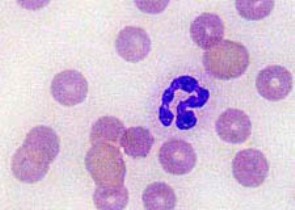
Sometimes the spleen can have little bleeds that heal a little and then bleed again. This can account for frequent blood loss, ie anemia. The cells your vet saw can be seen sometimes in this situation. Chance had the same cells when his spleen was enlarged and had a benign growth. The ultrasound showed it.
Mind you this is just doing some proper testing to rule out some causes of bleeding. If this were me that is where I would want the testing to go.
My best Patrice
Alyssa,
I’ve looked over the lab work. First, have them run the platelets again with a sample that is drawn after a 10 hour fast, no food but plenty of water. Fat in the blood from a recent meal can interfere with test results.
Some items are out of range, for instance some white blood cells are higher than normal.
The albumin is a bit low. This is a protein made by the liver that keeps blood viscous and retains the fluid. When it gets low, fluid can seep into interstitial tissues and collect in areas like the abdomen.
The glucose is a bit high. Again, let’s see what happens when you fast her properly.
My first thought is that she may be fighting something. Infection, parasites, worms, allergies. But I really do want you to find out if they have done a SNAP 4 DX+ test recently. A particular tick disease can have symptoms like this, especially thrombocytopenia. That is low platelets.
“ITP” is a condition where the immune system attacks platelets. Usually responds well to high dose prednisone treatment. This is a somewhat common condition in dogs that recover from IMHA AIHA after they have recovered.
But before we get ahead of ourselves let’s repeat the cbc and see how accurate these values are. Do the SNAP 4 DX+ asap, it takes a tiny bit of blood and about 8 minutes to show a negative or positive for 4 tick diseases and heartworm. Have a fecal done looking for hookworms. Let’s cover the basics first. Is there any chance that she developed an ulcer from prednisone? Did you use stomach protection and Sucralfate?
My best Patrice