Forum Replies Created
Lynette,
You have to be careful what you buy. Unscrupulous people know how desperate dog owners can be to save their dog and they will prey on that panic by offering very expensive promises that their product will cure your dog. There is not one thing on the market that will do that. And, in fact, many of these products can actually make your dog worse.
One particular ingredient that is touted often is Kelp, seaweed. They claim that it has many health benefits. The risk with this natural product is that it can contain variable levels of iodine, because it is harvested naturally. (It can also absorb toxic elements from the water where it is harvested, like lead.)
Iodine, in trace amounts, is important in human thyroid health. Canines need it too but in even smaller trace amounts. The risk with even just a little too much is that it can cause damage to the thyroid gland which can lead to an acceleration of a condition called canine autoimmune thyroiditis. This is a gradual destruction of the thyroid gland and will make a dog very ill.
Iodine, unfortunately, is an ingredient (sometimes in too large of a dose) in far too many canine supplements and dog foods. Adding more to what may already be too much by supplementing will cause damage to the canine thyroid.
Our experience is that the best way to treat these very sick dogs is to remove as many suspect supplements and ingredients from the diet as possible. We can’t know what is interacting and possibly causing worse symptoms. Many owners do not know the some of the kinds of foods that humans eat can be hazardous to dogs. They think since it is good in our diet, it must be good for dogs.
If you wish to supplement right now one of the recommendations by Dr. Dodds is Pet-Tinic. You can also buy “look-a-likes” for Pet-Tinic like Doc Roy’s B STRONG.
Or alternatively you could cook up a tiny bit of liver and give her a small piece once a day. The guideline is about 1 ounce per 10 pounds of body weight per week. So my dogs at around 90lbs would get about 9 ounces per week (a finger sized piece a day). This is real food and it has enormous amounts of nutrition.
Real food is always going to provide trace minerals and vitamins that you can actually determine the amount by looking a food’s nutrition table. I was NEVER able to find an appropriate nutrition table for bio-prep. They only said that because it was a natural product they couldn’t provide that kind of information because it was too variable. That’s dangerous.
my best
patrice
Lynette,
I really understand how hard this is. You have NO idea what to expect and you are trying to make decisions based solely on your emotional reactions.
My goal has always been to educate owners with enough information so they can make educated decisions. It is impossible, in a short time, to explain everything you need to know. So for some of this you will have to trust our experience and knowledge. I’ve read plenty of the negative stuff you are accessing. The diagnosis and treatments of these canine blood diseases is not straightforward and the opinions can vary from one vet clinic to the next. In my opinion and experience, if certain steps are taken from day one, there can be great successes. Not all vets are completely experienced with all these diseases and they can make small errors in the early days that can lead to problems.
In the early days of hemolytic anemia what you should expect is extremely variable depending on many things. From my viewpoint and experience, the most important thing you should expect is your vet to make sure that they have ruled out ALL causes for hemolytic anemia that may respond to remedial treatments.
A good example of this are tick diseases. Some tick diseases can be the cause of hematological disease. So there is a simple, in clinic, test called the SNAP 4DX+ that can perform a yes/no for 4 tick diseases and heartworm. It takes about 8 min to perform in the vet’s office and requires a tiny bit of blood. It shouldn’t cost more than $40. But yet many vet clinics do not offer this test or skip over it, not thinking it is important to consider.
There are other rule outs that I like to see done in the early days as well. Getting a look at your paperwork and test results will tell me if these were done or might need to be done.
In any dog there can be multiple triggers that lead to the development of AIHA IMHA or bone marrow failure. Sometimes it is just one trigger or more often it can be a combination of triggers that pushes the immune system to “not be tolerant of self.” An example would be a female dog that is still intact and the vet tells the owner it is time for her yearly vaccine boosters. Let’s also say that this dog has had bad allergies all of it’s life. This is a recipe for problems and after the booster shots the dog has an immediate autoimmune response that leads to hemolytic anemia.
So part of your job is to think back and develop a list of all these kinds of things and determine if any of them play a role in what is happening. The list can be extremely variable. Dr. Dodds of Hemopet.org has developed a lengthy list of these contributions and I am going to post a shortened version here.
Genetic or familial history
Pregnancy
Stress
environmental
emotional
physiological
Hormonal Irregularities
Nutritional Influences
deficiency or imbalances
trace minerals
nutrients
vitamins
chemical preservatives
toxins in feeds
chemical or drug residues
spoiled feeds
Adverse Drug Reactions
Viral Infection
parvovirus
retroviruses
cytomegalovirus
measles and distemper viruses
hepatitis viruses
Frequent or Recent Use of MLV Vaccines
parvovirus
distemper
hepatitis – Lyme (vaccines alone or in combination)
Bordetella
rabies
Underlying or Concomitant Disease
lymphoma or leukemia (retrovirus infections)
bone marrow failure (low red and white cells, platelets)
immune dysregulation
humoral – cellular (immunodeficiency )
chronic infections
bacterial
viral
parasitic
fungal
Other Autoimmune Disorders
Will she need a transfusion? We don’t know yet, it is very possible with the early treatment of immunosuppressant drugs like dexamethasone and prednisone the destruction of the red blood cells can be stopped. So how do we know?
In these early days they should be monitoring the PCV pack cell volume and the HCT hematocrit frequently, in answer to your question. There are many other things on the CBC complete blood count I would like to see as well. The PCV is a simple and quick test and really should be done every few days in the beginning. It requires a small amount of blood in a tiny tube that is held up to a chart for a visual read (and should be inexpensive!) We would like to see her PCV rise from 14% in the next week. Ideally it would be nice to see it into the mid 20’s. Then there would be less need to consider a transfusion. But, sometimes it is just necessary to do a transfusion.
If Macy has never had a previous transfusion there is no need to type and match donor blood (less $$). The first transfusion is “free of reactions.” After the first transfusion and all subsequent transfusions, they must be typed and matched to ensure she won’t have a reaction.
In theory any competent vet can perform a transfusion and some vets do have a “donor dog” they use for this purpose. Other clinics may rely solely on purchased universal donor blood. In most cases of AIHA the best blood is that which contains most of the blood elements.
If your vet seems to be struggling with what to do, they may not be the best choice for this procedure. However, if your own vet feels confident and you trust them, it can be less expensive than using an expensive emergency clinic. I paid about $300 at my own vets, these procedures take anywhere from 2-4 hours so they are very labor intensive. I considered this a bargain.
Please, set aside your grief and unhappiness. Macy can sense this and it is upsetting to her. Your job now is to help her, be cheerful and give her all of your love each day. I promise you, once she is better, you can set aside a whole day to just cry if you want, but right now it’s not giving you a clear mind. I know this is extremely hard but I have seen many owners become very disciplined and saved their dog’s life. You can do this and we will help you.
my best, patrice
Lynette,
I am sorry to read about Macy, you must be frantic with worry.
There is plenty to be hopeful for, you got her to the vets and she is in treatment. The drugs take a little time to to become effective. Your vet may want to consider a transfusion at this point. Don’t be worried about this it will help improve how she feels and probably make her want to eat.
As for diet right now it would be best to use very easy to digest foods like little bit of cooked chicken and some overcooked wet rice.
Is your vet prescribing stomach protection like Pepcid? Prednisone can be very hard on the stomach and can lead to stomach ulcers. The dose would be very small considering her weight. Maybe a quarter pill a half hour before her first meal of the day.
Also in the early days of hemolytic anemia there is a risk of inappropriate blood clotting. Talk to your vet about using low-dose aspirin to protect against this.
Read the forum topics to see how other people have had success. Also on this website we have Our Stories where you can read how other people have helped their dogs. There are also many helpful resources that you can read or links to websites that will also help you understand some of the drugs that are used or test that are given. Look under AIHA Terms and also under Second Chance Resources.
To upload files for the moderators use the form on the urgent advice page. We would love to look over any blood work and lab results and help you understand what they are saying.
Are there any questions I can answer for you?
My best, Patrice
Carrie,
It’s so good to hear about a success! Good job Mom taking care of Daisy!
Ok, titers measure the presence and amount of antibodies in blood. From the results you either prove immunity to a disease or if it is negative, you supposedly prove lack of immunity. Sometimes it can show an equivocal (not enough) immunity. Dr. Dodds would explain this certainly with more detail, so I would be neglegent to make this blanket statement. It’s not quite this simple.
In general though, for most of the serious canine diseases that we vaccinate for as puppies there will be lifetime immunity. The big exception right now (in terms of dangerous deadly disease ) is the rabies vaccine, Dr. Dodds is performing a 7 year trial to see if it would be effective for longer than the current required 3 year. Unfortunately the rabies vac can be the most troublesome one causing autoimmune reactions.
So what does a vaccine titer really tell us? Certainly not that our dogs will never get sick from one of these diseases. But rather they tell us that in this dog there is the potential, if she were ever exposed to distemper for instance, that there is the presence of sufficient antibodies against distemper. But the million dollar question is, could my dog actually mount an attack to distemper and win? The test can’t tell us for sure. But it’s pretty reliable still the same. For dogs with compromised immune systems, there is a possibility that they could not mount a sufficient attack to survive.
This is why we rely on the vets interpretation of the titer results. I have done titers on all my dogs for many years with Dr. Dodds Hemopet. The values are on the results I get in my email but I also rely on her advice about questionable results. One of my dogs results reported a lower value for one disease. The lab recommended boostering. She told me that any titer AT ALL indicated the presence of immunity, period. Why? Because it is natural for our immune system to quiet down in the absence of diseases that challenge. That means all the antibody soldiers take a nap until the guy on watch alerts everyone that distemper is invading!
So really, titers main purpose is to determine if at any time in your life you were exposed to the mumps, or your dog was exposed to a distemper shot.
So the original purpose for titers were breeders who wanted to be sure all the puppies had actually “taken” the vaccine properly. It has now blossomed into a misunderstood way of proving that a dog is immune to certain diseases. And that is sort of the confused reaction by vets concerning titers, why is my client so determined to have these titers run?
Your response is as I have pointed out above, any titer at all indicates a successful vaccination at some point in life, and that the body has developed antibodies in sufficient quantities that it can most likely fight that disease. Constantly re-boostering a dog puts the dogs immune system on continuous alert and wears out the dog’s capability to fight disease. Really for most diseases once is enough.
You can read a lot about this right on our website. On this page you can prepare a test request for vaccine titers from Dr Dodds.
https://www.secondchanceaihadogs.com/hemopetresources/
On this page you can find all kinds of information about vaccinations and Dr Dodds recommendations. Note her latest 2017 minimal vaccination schedule is on this page, read it carefully and keep a copy in your wallet in case some Gung-ho vet tries to get Daisy “up to date on her vaccines.” Show this paper and walk out the door.
https://www.secondchanceaihadogs.com/vaccine-resources/
You also see her recommendations for non core vaccines. Most of these are not one time only, they wear out and need frequent boostering. They can be imperfect in protecting against disease due to their nature and how they are developed and finally the recurring boosters can lead to more autoimmune reactions.
If you live where leptospirosis is rampant then you have to decide, vaccinate to protect or dont take your dog where they might contact leptospirosis. But in either case the protection is not perfect, be cautioned. My friends little brussels griffon was exposed to leptospirosis and nearly died, it was very quick. She took her to a dog park near water everyday and that is how she contracted it. We can’t be sure a vaccine would have protected her, since there are many variants of leptospirosis around. What to do? The world is not perfect.
Just an aside, most dog classes allow original proof of initial vaccinations and titers for dogs entering classes now. Exception is rabies, required by law. If your dog is exposed to rabies and wasn’t vaccinated or has lapsed they will die and may expose you to it as well. The treatments are not perfect.
These are important discussions to have with your vet after your dog has recovered from AIHA, IMHA.
If you have more questions please ask,
My best Patrice
Darbi,
I am so glad you have been doing some follow up on your own. You are probably correct then, this is an old infection, (common), recurring. These cases can be more difficult to treat, as you have probably already read on Gil’s site. She does not take any of this lightly, neither do I.
No, if the test selected was babesiosis then it does not necessarily follow that they tested for co-infections. Another incredibly stupid move by vets, not understanding co-infections. They can account for other signs and symptoms in many cases.
You drive the bus. This is your dog and she relies on you for your advocacy. I also advise owners that you don’t burn your bridges. You do want to be part of a team that treats her, not a helpless owner in the waiting room hoping the vet knows the right things to do.
If this were me I would do two things, one of which I have already done years ago that saved Chance’s life, I got a consultation with Dr. Dodds and she saved his life. You can find all the links for Dr. Dodds on this page, just click on the pictures to go to her site, find the owner consultation page. If you have trouble paying for the $150 for the consultation we can help you.https://www.secondchanceaihadogs.com/hemopetresources/
The second thing is to call and try to talk to Dr. Holland directly. Be very specific about what you need from her, no panicky chatter, be gracious and polite. Tell her the brief history, with all the details about tests done, medications dispensed and a brief current condition. Ask her how you should test her now to get the most effective treatment started. She will tell you what the most effective protocol is going to be right now. She does this every day, all year long.
I suggest you ask for 125mg every 12 hours for 8 weeks. You are going to need to protect her stomach for this, doxy is very hard on the stomach. Dogs can lose their appetite. Even if you still don’t have hard test results right now, I am sure Dr. Dodds would agree with me that you start the treatment.
I just finished a prophylactic doxy treatment on one of my Giants after being exposed to one tick bite. My vet does NOT mess around with these tick diseases. I don’t even have to go in, I just call and they dispense it. Then I follow up after 6 weeks with a SNAP 4DX+ test to ensure that I cleared the disease with this dosage.
So, for optimism sake, let’s hope I am really wrong. No harm is done by treating until you know for sure. That’s the cool thing about veterinary medicine, you can treat without a clear diagnosis, just based on suspicion.
my best
patrice
Darbi,
I’ve looked over all the bloodwork and read your descriptions. There are many things going on here, some are related to each other and others are not, and I want to discuss all of them in detail, in the future, but I wanted to highlight my first and biggest concern. Tick disease.
My first comment is that there are NO ” “light” positive on Snap test for E-Canis.” I have belonged to a group called Tick-L since the early 90’s. It is an email group, headed by a scientist, that has been discussing all things canine tick disease for a very long time. The website I am going to link you to several times is a resource developed by a long time member Gil Ash, who is a consummate researcher. She has gathered all of the information we have discussed these many years and put in a website for the public. A great deal of this information comes from a vet that is a consulting member of Tick-L, other information is gathered from professionals in the field of infectiousness veterinary disease. And much of it is what we have read from owners coming to the list for help in these past 30 years. Over the years we have all read some owners report that their vet said it was a “light” positive. Gil, as stubborn as she is, contacted IDEXX directly to ask about this. They confirmed that the test is either positive or negative. Any interpretation of the color is wrong. Change in color indicates infection.
The SNAP 4DX test is a screening test. It provides a yes/no result. It was designed as a screening test to quickly identify if a dog has 4 different tick diseases or heartworm. There are other tests that are used to follow up, after a positive has been found on the SNAP 4DX that have a finer look at “degree” of infection and that are used to determine how successful the treatment is going. But if the SNAP 4 DX is showing a positive for erhlichiosis then Middy has been exposed and is infected with this tick disease.
Go to this page on our website:
https://www.secondchanceaihadogs.com/medical-tests-resources/
Click on SNAP Assay. This opens a paper that explains how this test works. You don’t have to read this, but do look at fig.2 on page 133, this shows images of how the test works. The control spot is a light blue on the lower right and will remain this color throughout the test. The other spot is the part of the test that identifies active infection. They are demonstrating here that it is a darker blue. It doesn’t matter how much darker. These tests were designed to detect any existing disease.
Here is Gil’s website that discusses all things tick disease. I am including a direct link to the page discussing erhlichiosis, please read this carefully.
https://sites.google.com/site/tickbornediseaseindogs/ehrlichiosis
For your quick reference, and for those reading this reply, I am including from that page the significant list of identified signs and symptoms that can be seen in this disease. Of course we understand that any of these can also be identified with other conditions, but I wanted to give you an idea of how cumulative the effects of this disease can have on the body. Some are very serious, including low platelets (clotting problems), neurological signs, kidney disease (glomerulonephritis), bone marrow suppression etc.
intermittent fever
intermittent loss of appetite
lethargy
total loss of appetite
gradual loss of body condition (esp. along the spine and around the eyes)
viral tumors on the face/mouth/muzzle
hemorrhaging even when the blood count looks normal
clotting problems
low or high calcium levels
seizures
muscle wasting
skin infections
neurological signs (repetitive obsessive actions or palsy)
diarrhea
low platelet count
urine too alkaline
vomiting
hyper-reflective eyes
low white blood cell count
anemia
glomerulonephritis
bleeding from nose or eyes
ocular signs
arthritis
weakness
pallor
incontinence
pneumonia
cough
kidney failure
increased thirst and urination
incoordination
neck or back pain
bleeding under the skin or a rash
swelling of the legs or joints
enlarged lymph nodes
irreversible bone marrow suppression
What is good is that your vet decided to be cautious and give doxycycline in case there is tick disease. What is perhaps not so good is that the dose is much lower than recommended by Tick-L. I am guessing Middy’s weight is around 45 lbs. According to Tick-L she should be getting 5mg of doxy per pound of body weight every 12 hours for 8 weeks. That’s about 45lb x 5mg = 225mg doxycycline given every 12 hours for 8 weeks (500mg per day). You are giving 100mg AM and 25mg PM. That’s 125mg a day. This will just “tickle” the disease as we often say, causing it to retreat a bit and then reappear when the coast is clear.
https://sites.google.com/site/tickbornediseaseindogs/treatment
Gil’s message about dosage:
“A semisynthetic tetracycline, doxycycline is the drug of choice for ehrlichiosis (including Anaplasma phagocytophilum and platys), Lyme Disease and Rocky Mountain Spotted Fever.
The dosage we recommend on Tick List is an aggressive one: 5 mg. of doxy per pound of body weight given every 12 hours for 8 weeks. For those who prefer to figure body weight in kilograms, this is approximately the same as 10 mg per kg, the difference being not enough to mention.
This is twice as high as the dose that is generally recommended – and here I should probably remind you that I am not a veterinarian or a medical professional. Well, that’s true. At the same time, I should tell you that your vet is the one to decide what dosage to use. Well, I would concur if your vet is familar with tick-borne disease and knows it inside out. If not, he or she should consult with a colleague who is before deciding on the dosage.
In my opinion and that of everyone on Tick List, to my knowledge, ehrlichiosis and Lyme must be hit hard the first time out, if at all possible, and lower doses and/or shorter treatment times all too often mean recurrence. Unless your dog is one of the few that cannot take doxycycline or take it in this higher dose, my best advice to you is to insist on it. In the experience of a great many of us on Tick-L, each time ehrlichiosis or Lyme recurs, it’s harder to stop or contain it. ”
I truly understand how much information this all is and how overwhelming it seems. I’ve explained this at least 500 times in my life, probably more. Tick disease has existed as a very serious disease for a long time around the world but yet, just like AIHA, many US vets don’t have a complete understanding of all the details like a specialist would. When we were able to convince owners to stand up to their vets and get the proper treatments, the dogs survived. Sadly those vets who were reluctant to help or didn’t even believe there was tick disease, those patients often did not survive.
What can you do? I suggest you ask for a more defined, more accurate test to ensure that the degree of the infection is clearly identified immediately. Tick-L has always recommended ProtaTek labs in AZ. Dr. Holland is an expert and all she does all day, every day, is test for veterinary infectious diseases. Her knowledge of tick disease is amazing.
All the information you need to contact this lab is on this page. The information you want your vet to read and respond to is this: “The link takes you to a page where you can download a Request Form or Dr. Holland’s technical brief on “Canine Ehrlichiosis and Diagnostic Importance of End-Point Titers” You are asking to have the end point titers tested so you can find out the degree of infection.
https://sites.google.com/site/tickbornediseaseindogs/testlaboratories
Dr. Holland has been known to take calls from concerned owners and help them figure out what they should be testing for in their particular area of the country.
Do you have any questions?
My best, patrice
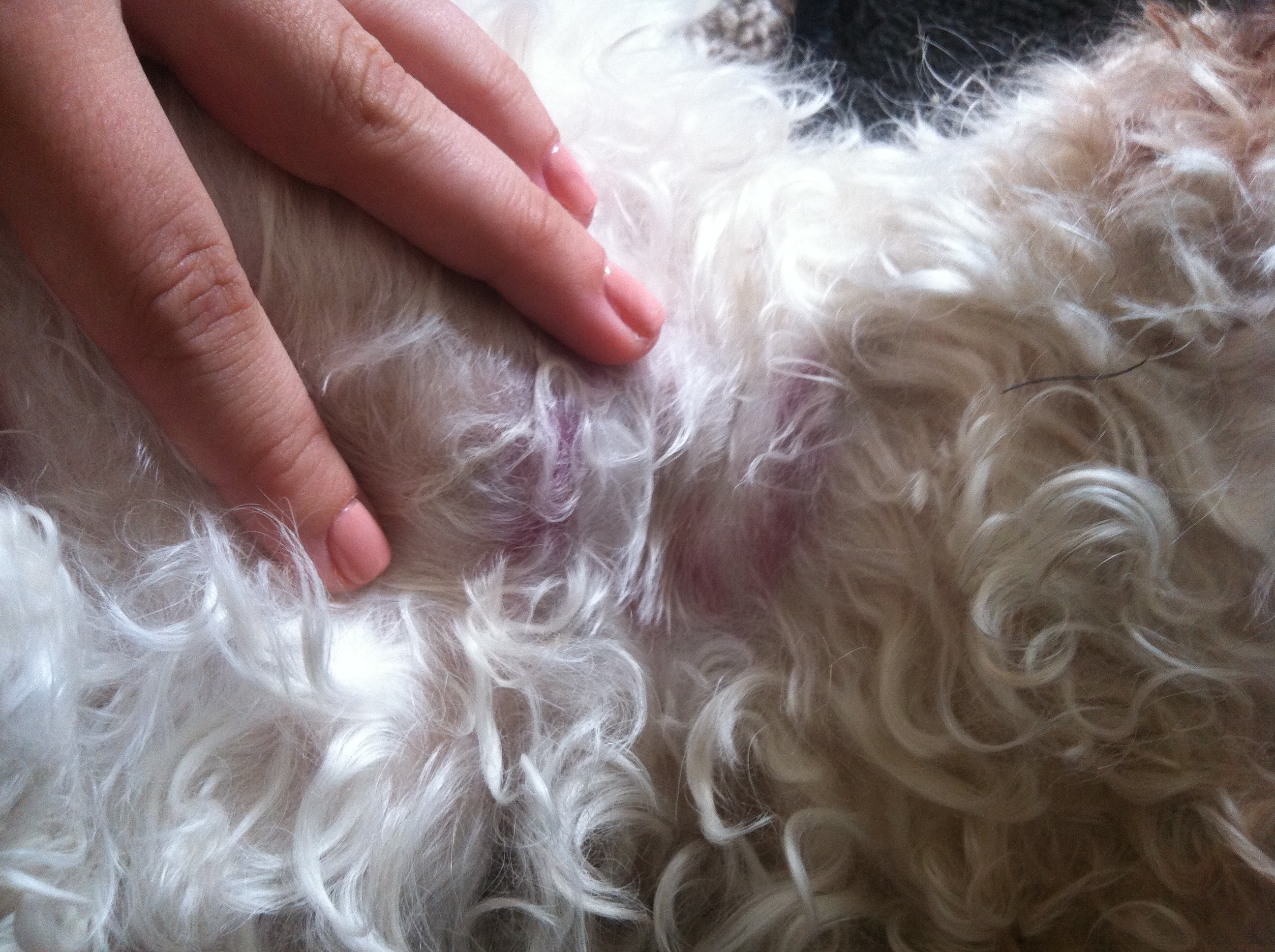
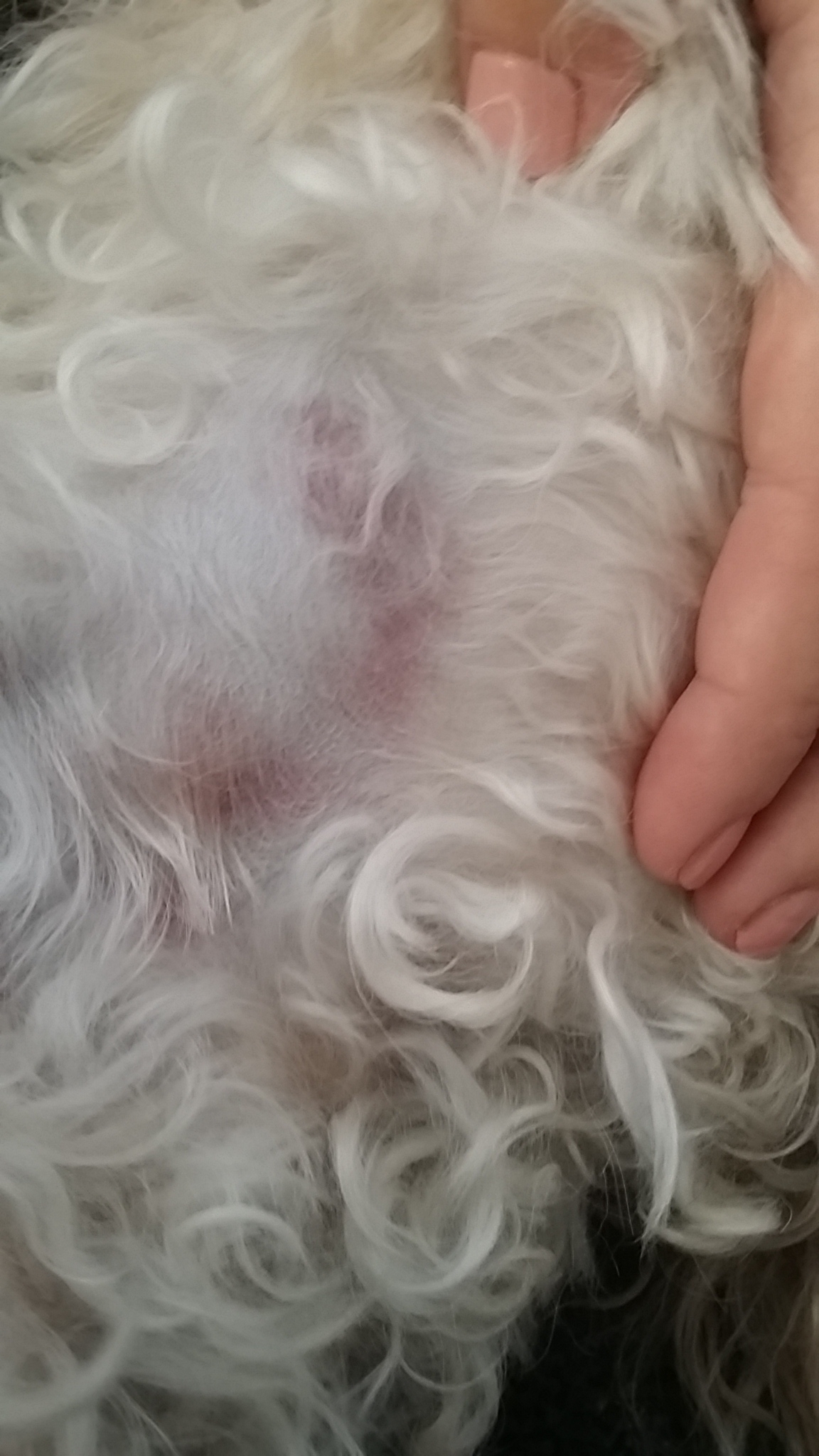
Second Chance AIHA Dogs has excellent resources about calcinosis cutis on this page, just click on the pictures to open the pdf documents:
https://www.secondchanceaihadogs.com/dermatology-resources/
And a glossary item on this page:
https://www.secondchanceaihadogs.com/AIHA_Terms/calcinosis-cutis/
my best, patrice
Two questions, did the vet ever ask you about the possibility of Storm getting into old rat poison? Did you discuss this?
Also, is Storm likely to pick up and mouth all kinds of crap? Some coins can cause a form of hemolytic anemia, as can rat poison.
This is a much likelier cause ofhemolytic anemia in young dogs than older dogs because they will get into many things they shouldn’t.
My best Patrice